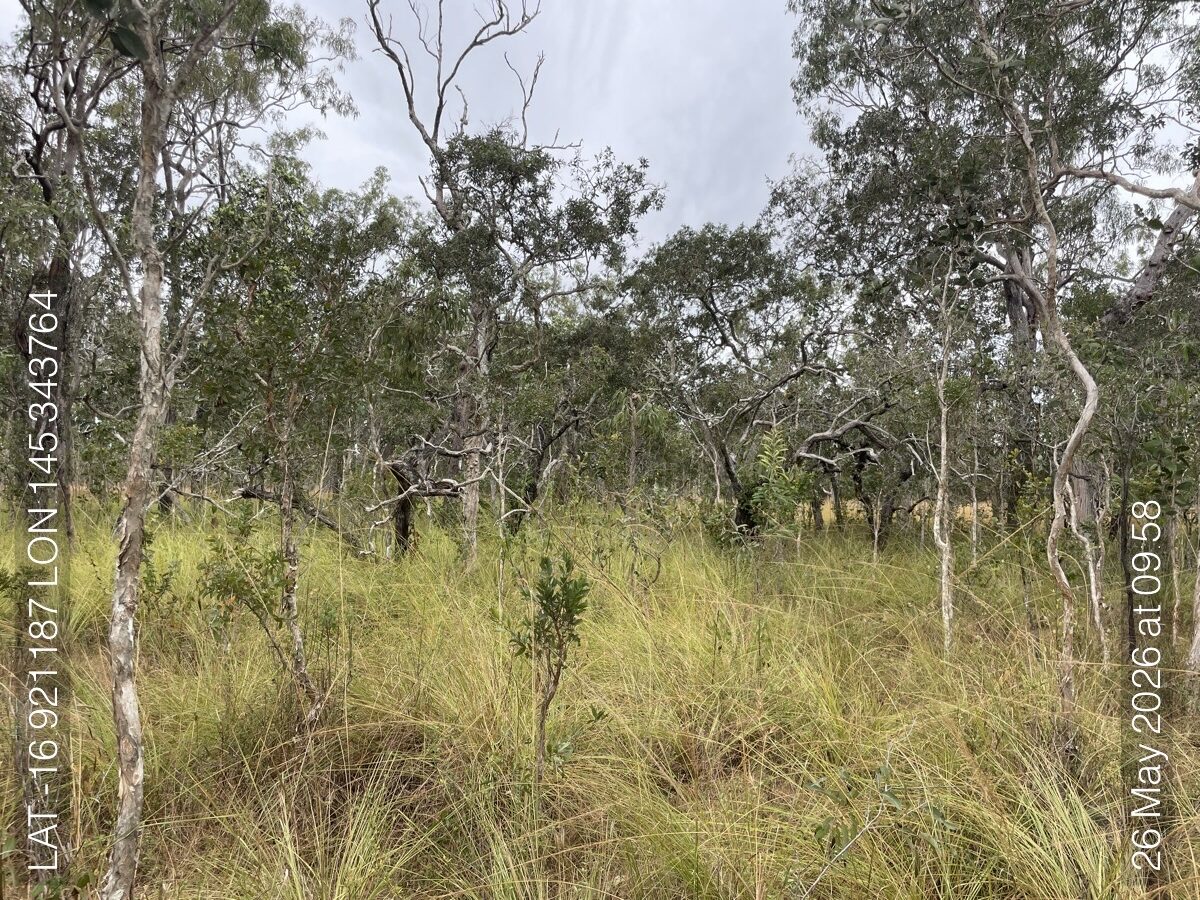
Gulf Savannah NRM biodiversity officers Ed and Oceane joined the Australian Wildlife Conservancy team last week to deploy a network of 60 camera traps at Mareeba Wetlands as part of ongoing efforts to monitor and protect the endangered northern quoll (Dasyurus hallucatus).
The survey forms part of a long-term monitoring program designed to assess the occupancy and activity levels of northern quolls across the reserve, providing valuable data to help guide future conservation and habitat management efforts.
Northern quolls are endangered carnivorous marsupials found only in Australia and are considered one of the country’s most struggling native predators. Once widespread across northern Australia, the species has experienced significant declines over recent decades due to threats including cane toads, habitat loss, feral predators, and inappropriate fire regimes.
The monitoring work underway at Mareeba Wetlands will contribute to a broader understanding of how northern quolls are using the landscape and how populations are responding to conservation activities across Far North Queensland.
Camera trapping plays an important role in this work, allowing researchers to monitor wildlife activity with minimal disturbance while gathering long-term data on species presence, movement, and behaviour.
Gulf Savannah NRM is continuing to support northern quoll recovery by managing key threats and improving habitat conditions across the Northern Einasleigh Uplands region specifically.
The project is funded by the Australian Government Natural Heritage Trust and delivered by Gulf Savannah NRM, a member of the Commonwealth Regional Delivery Partners panel.