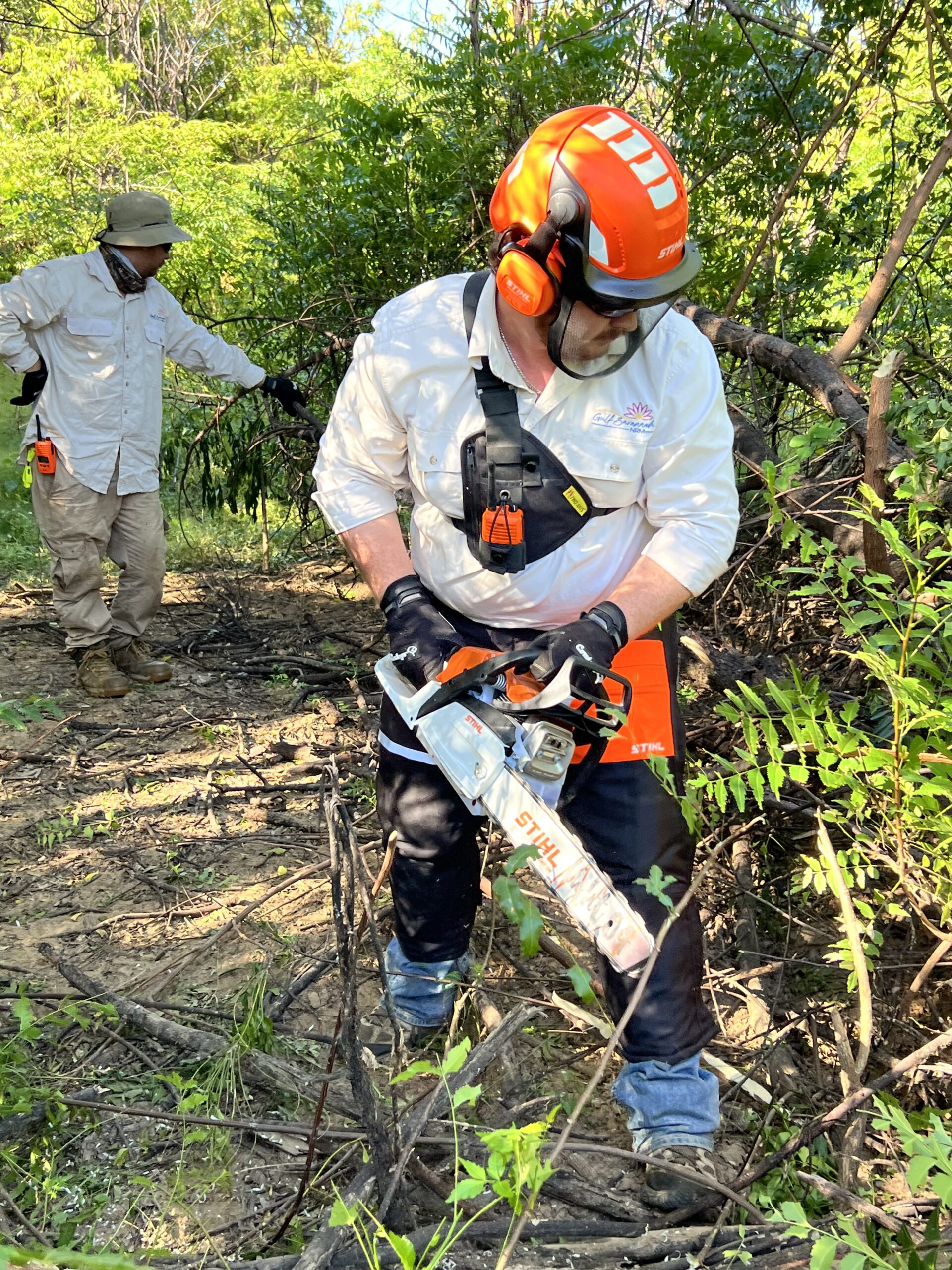
The Gulf Savannah NRM field team has hit the ground running, completing two successful field trips to the Gilbert River, near Georgetown, to survey the landscape, identify access points, and map native vegetation as part of a project to tackle threats from invasive neem trees along the Gilbert River.
Field Team Supervisor Max Marshall said the early stages of the project have been critical in shaping a long-term strategy for managing neem infestations in riparian areas across the Gulf.
From these initial trips, the team has developed a three-part approach designed to tackle some of the key ecological and logistical challenges across the region.
“We’ve spent a lot of time in the field looking at what’s actually going to work on the ground, not just for the environment, but for the landholders managing these areas every day,” Max said.
“Targeting the neem along the border of agricultural lands will create a buffer zone and help producers by lightening their workload for neem control,” he said.
To ensure these outcomes, a major focus has been placed on prioritising treatment around surviving native species, with the goal of encouraging natural regeneration and helping native vegetation reclaim affected areas over time.
“If we can protect and work around those native plant species, they’ve got a much better chance of recruiting naturally and restoring parts of the ecosystem themselves,” Max explained.
The team has also concentrated heavily on improving access deep into riparian zones. This has already involved cutting up to three kilometres of track by hand, wide and clear enough for vehicles to pass through.
Creating and maintaining access will allow crews to return efficiently for ongoing treatment, monitoring, data collection, and to help ensure the project delivers lasting results rather than short-term fixes.
This approach is also expected to help ease the burden on producers by reducing the spread and severity of future infestations on private property.
Neem has become a significant issue across Etheridge and Croydon Shires, and other parts of the Gulf region. Its robustness and adaptability make it a prime pest for spreading along waterways and disturbing land. Dense infestations can outcompete native vegetation, impact biodiversity, reduce the banks’ resistance to erosion, and create ongoing management challenges for graziers and land managers.
Its ability to thrive in harsh conditions and regenerate quickly makes coordinated management essential, particularly in remote parts of Far North Queensland where infestations can expand rapidly if left untreated.
Gulf Savannah NRM CEO Zoe Williams said this project has been highly anticipated in North West Queensland, where land conditions directly influence local communities’ ability to thrive.
“Invasive neem trees in the Gilbert River catchment have been a significant concern for residents, graziers and local councils due to their impact on the natural environment and agricultural production values,” Zoe said.
“We are pleased to now have the necessary funding to work with local communities to tackle this issue and restore native vegetation in sensitive riparian areas.”
The funding referred to is the $3.88 million secured by Gulf Savannah NRM late last year as part of the Queensland Government’s Natural Resource Management Expansion Program. This investment into the region is driving practical, on-ground initiatives like neem management.
With groundwork now underway, the project is building momentum towards improved riparian health, while supporting local producers across the region.
This project is funded by the Queensland Government’s Natural Resource Management Expansion Program.