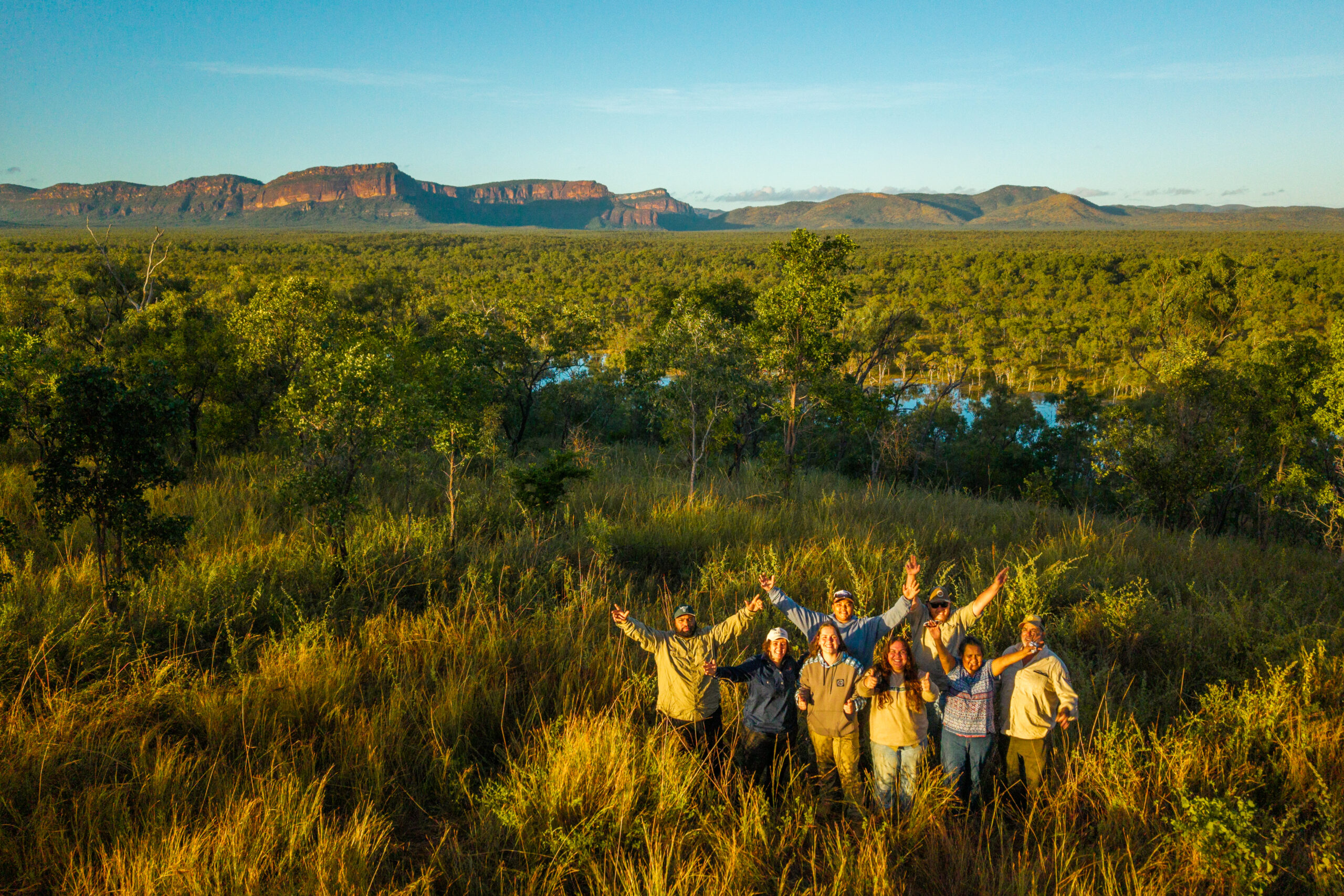
A recent visit to Kondaparinga Station has marked an important step forward for the Together for Country Weed Management Program, with Gulf Savannah NRM project staff and the Kuku Djungan Murtiki Ranger team strengthening weed control efforts and sharing knowledge on Country.
While the project focuses on tackling invasive weeds and improving landscape health, it is also creating opportunities for elders to pass on cultural and environmental knowledge to younger rangers.
Ranger Coordinator and Elder Desmond Grainer said caring for Country was closely tied to sharing stories and knowledge with younger generations, even in the throes of conducting weed assessments.
“For me, and a lot of our elders, we see it as our job to pass on information to these young folk. They’re our future, so we have to teach them,” Desmond said.
“If we’re going for a walk and looking for weeds, I’m sharing stories. It all connects…”
Amid walking and cultural sharing, Project Officer Ashley King said the field visit was an important first step in building a clearer picture of weed impacts across Kondaparinga Station and forming the foundations for future monitoring work.
“The focus of the visit was to better understand weed presence within the defined 100-hectare management zone and to establish a strong baseline for ongoing monitoring and management,” Ashley said.
“We conducted on-ground weed surveys across the site, identifying and recording priority weed species and gaining a clearer understanding of their distribution and density.”
“This work is critical in guiding targeted control efforts and ensuring management actions are both effective and efficient moving forward,” she said.
More than 15 weed species were identified within the 100-hectare management zone during the survey. While rubber vine (Cryptostegia grandiflora) was identified as the primary target species, several other problematic weeds were also recorded, including hyptis (Mesosphaerum suaveolens), devil’s claw (Martynia annua), calotrope (Calotropis procera), spinyhead sida (Sida acuta) and flannel weed (Sida cordifolia).
The diversity and distribution of these species highlight the complex weed management challenges present across the site.
Alongside surveying for problematic weeds, the team also established monitoring sites using the VegCAT Assessment tool and installed photo monitoring points, which will allow changes in vegetation condition to be tracked over the course of the project and help inform future management activities.
After high-stepping through dense overgrowth to complete these tasks, the rangers had the chance to reflect and imagine the Country clear and weed-free.
For Ranger Ngaire Dombi-Grainer, the work responds to a very real challenge facing remote communities managing Country with limited support.
“Invasive species are very much a problem out here because we are rural and have no help,” Ngaire said.
“We are very self-sufficient, so it would be amazing to get the weeds down. And even for the little ones – when it comes to wildlife, we have a lot of reptiles, snakes and spiders – weeds become a big problem for safety,” she said.
“Once we work with Gulf Savannah NRM, it will be absolutely amazing to keep these invasive plants down.”
As reflected by Desmond and Ngaire’s mission statements, the project is helping to strengthen Traditional Owner stewardship of Country through collaboration, knowledge sharing and on-ground partnerships between Elders, rangers and NRM staff.
The work undertaken at Kondaparinga Station forms part of the broader Together for Country Weed Management Program, which is being delivered in partnership across four collaborative sites.
Following completion of baseline assessments, the next phase of the project will focus on aerial data collection, detailed planning and the implementation of aerial and on-ground treatment activities tailored to each site’s priorities and objectives.
This project is funded by the Queensland Government’s Natural Resource Management Expansion Program.