
Clearing the way home: how Indigenous rangers are reclaiming access, culture and connection through weed management
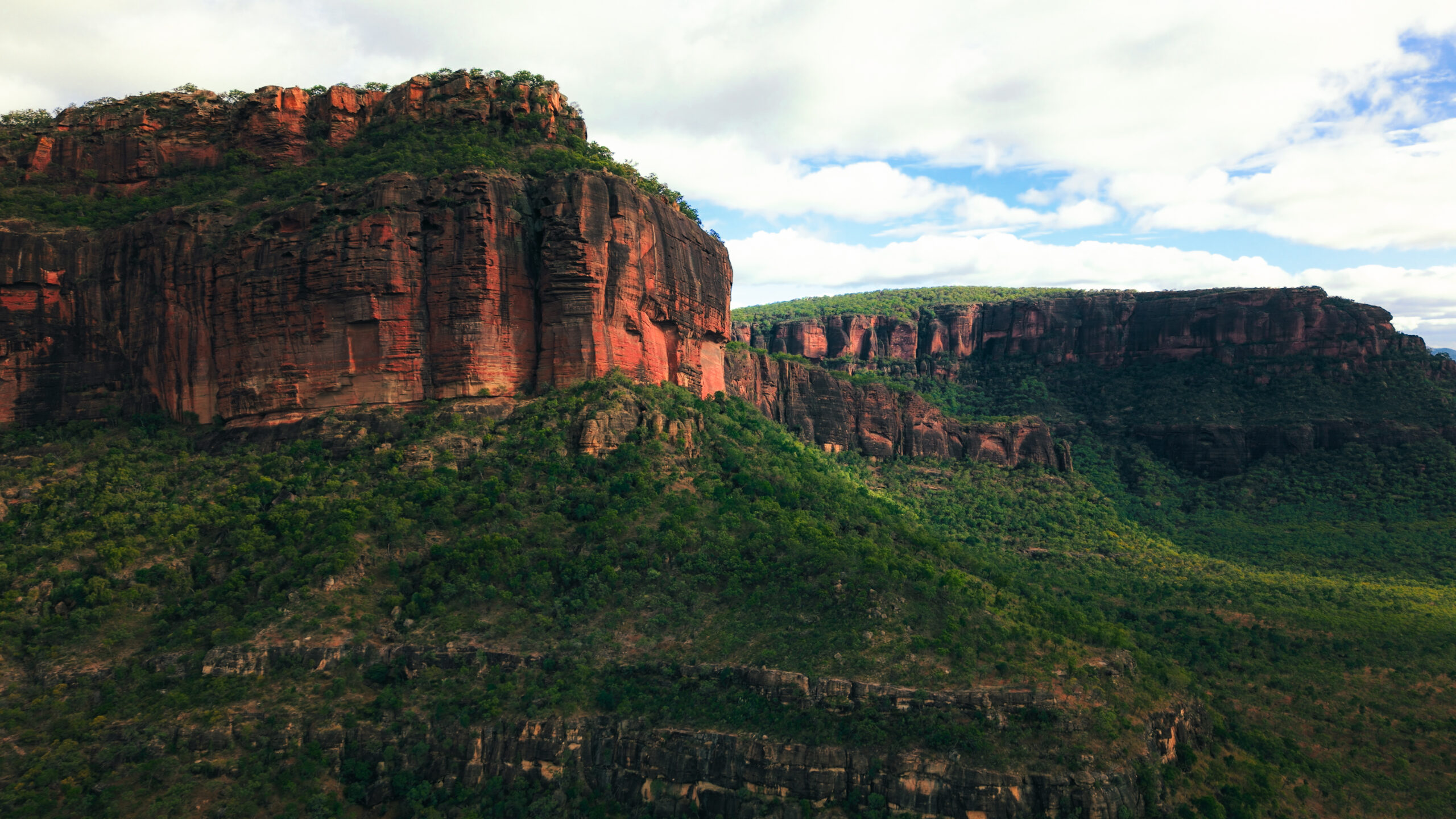
As first light fell across the silhouette of Ngarrabullgan (Mount Mulligan), Grandad Desi illuminated the landscape with words that were their own kind of sunrise: full of hope, and a vision of the day ahead.
Whatever work we do on Country, he urged us to understand that it’s ultimately about connection, custodianship and honouring past, present and future generations through the way we care for the land.
The mountain looked back at us as Kuku Djungan Murtiki Rangers and Gulf Savannah NRM officers stood together atop one of Kondaparinga Station’s highest points. Though stoic, it was a quiet reminder of what we are working to protect.
Natural Resource Management can often focus on methods and monitoring, but in rare moments like this, people and place stand triumphantly side by side, like a partnership bound by both trust and commitment to Country.
This was just one moment of many during which the Together for Country Weed Monitoring Program sprung to life during recent field work. Over three days of surveys, strategic planning and spirited yarns, weed control transformed into an intergenerational effort to revive Indigenous land and all the cultural richness that flows from it.
Much more than weed control
From 22 to 24 April, rangers and NRM officers pushed through dense vegetation to understand exactly what the project needs to deliver on Kondaparinga Station. The field trip was designed to survey weed presence within a defined 100-hectare management zone and establish a strong baseline for ongoing monitoring.
Though often overlooked, invasive weeds profoundly alter the landscapes they invade. They outcompete native vegetation, transform habitats and reduce biodiversity. Yet during our time alongside the rangers, another consequence repeatedly surfaced – one less frequently discussed, but no less significant.
Connection to Country.
For Elder and Ranger Coordinator Desmond Grainer, fondly known as Grandad or Desi, invasive weeds are already changing the way Traditional Owners interact with their ancestral lands.
“We’ve seen that some places are very hard to get down to places like the rivers,” Desi said. “If weeds make it hard to get to sacred places, then they cut our spirituality and connection with the land. But a weed-free Country means we can access areas more easily, not only waterways, but important things like sacred sites,” he said.
As highlighted by Desi, dense infestations can block access to waterways, cultural sites and traditional travel routes. They alter fire behaviour, outcompete native bush tucker species and make areas unsafe for families to visit. For many Traditional Owners, these impacts extend well beyond the environment, affecting the ability to maintain cultural practices and fulfil responsibilities to Country.
Waterways offer a powerful example. For First Nations peoples across Australia, rivers, creeks and wetlands have long been places of sustenance, story and spiritual significance. The 2007 Echuca Declaration, developed by the Murray Lower Darling Rivers Indigenous Nations, describes water as a living entity rather than simply a resource, while growing research recognises healthy aquatic ecosystems as fundamental to Indigenous social, cultural and spiritual wellbeing.
From both a professional and personal standpoint, Desi believes protecting access to these places is inseparable from the responsibility of ensuring future generations can continue caring for them.
“For me, and a lot of our elders, we see it as our job to pass on information to these young folk,” he said. “They’re our future, so we have to teach them. If we’re going for a walk and looking for weeds, I’m sharing stories. It all connects.”
That connection threads through every aspect of the project. As one of the region’s first Indigenous rangers in the early 1990s, Desi has watched generations grow up. Today, many of the rangers walking beside him are his own grandchildren, including Shaneale Dombi-Grainer.
“A highlight of this project is being able to walk around on Country where I haven’t been before, just because the number of weeds make no-go zones,” Ms Dombi-Grainer said. “Being with my family and having an elder walk with us … I don’t really see it as work, it comes naturally.”
Ranger Malachi Wason echoed that same sentiment: “I feel proud to be walking where my grandfather was, reconnecting with culture and land,” he said. “I know I’m doing him proud. He’d be with me here today in spirit. It makes me feel over the moon.”
Through conversations with the ranger team, one message emerged again and again: a healthy landscape is not simply one that supports biodiversity. It is one that supports stories, ceremonies, family connections and the passing of knowledge between generations.
Putting knowledge into action
The cultural significance of the project is something Gulf Savannah NRM Project Officer Ashley King witnessed throughout the field trip.
“It feels very special to connect with the Rangers – to see them building capacity amongst themselves, getting out on Country and really learning what defines healthy Country,” Ms King said. “It’s been a beautiful experience to engage and really come together to work towards an impactful project.”
That shared understanding sits at the heart of the Together for Country Weed Management Program, which supports Indigenous ranger groups to identify and manage priority weed infestations across those defined 100-hectare management zones. By combining cultural knowledge with modern monitoring tools, the project aims to build a long-term picture of landscape health while guiding future custodianship.
“A key focus is integrating Indigenous knowledge with aerial survey data to support future management decisions,” Ms King said. “The effort is also to bring ranger groups together to lead and coordinate weed surveillance and control measures on high-priority species within the region.”
During the recent visit to Kondaparinga Station, the team established a baseline understanding of weed presence across the site. More than 15 weed species were identified, with rubber vine recorded as the primary target. The diversity of species recorded reflects a challenge confronting land managers across northern Australia.
Australia now hosts more than 2,700 invasive plant species, with around 20 new species establishing each year. Together, they have become one of the country’s greatest threats to biodiversity, transforming habitats, reducing native vegetation and altering natural fire regimes.
Those pressures are expected to intensify across Far North Queensland, Cape York and the Gulf of Carpentaria, where climate change is projected to expand the distribution of invasive plants. Cyclones, floods and fires create ideal conditions for weeds to spread, while recovery efforts can unintentionally transport seeds and plant fragments on vehicles, machinery and equipment.
As regions increasingly experiencing climate extremes, weed management is no longer simply about controlling today’s infestations, but also about anticipating tomorrow’s. Long-term monitoring and early intervention are therefore becoming increasingly important, helping Traditional Owners identify emerging threats before they become more difficult to manage.
But while aerial imagery, monitoring sites and weed surveys will guide future management, the project’s greatest success may be less tangible. Desi believes that victory may not be measured by the number of weeds removed.
“I think the main thing I look forward to is seeing these young rangers [working on Country],” he said. “They’re the future.”
As the sun climbed higher above Ngarrabullgan on that final morning, the country below seemed to hold the stories shared over the previous three days: stories of weeds and waterways, ancestors and future generations, connection and shared knowledge.
Weed management is often measured in hectares treated, infestations reduced and monitoring points established. At Kondaparinga Station, however, it is equally a story of restoring access to Country and strengthening culture for the next generation to continue walking the same paths as those before them.
This project is funded by the Queensland Government’s Natural Resource Management Expansion Program.


