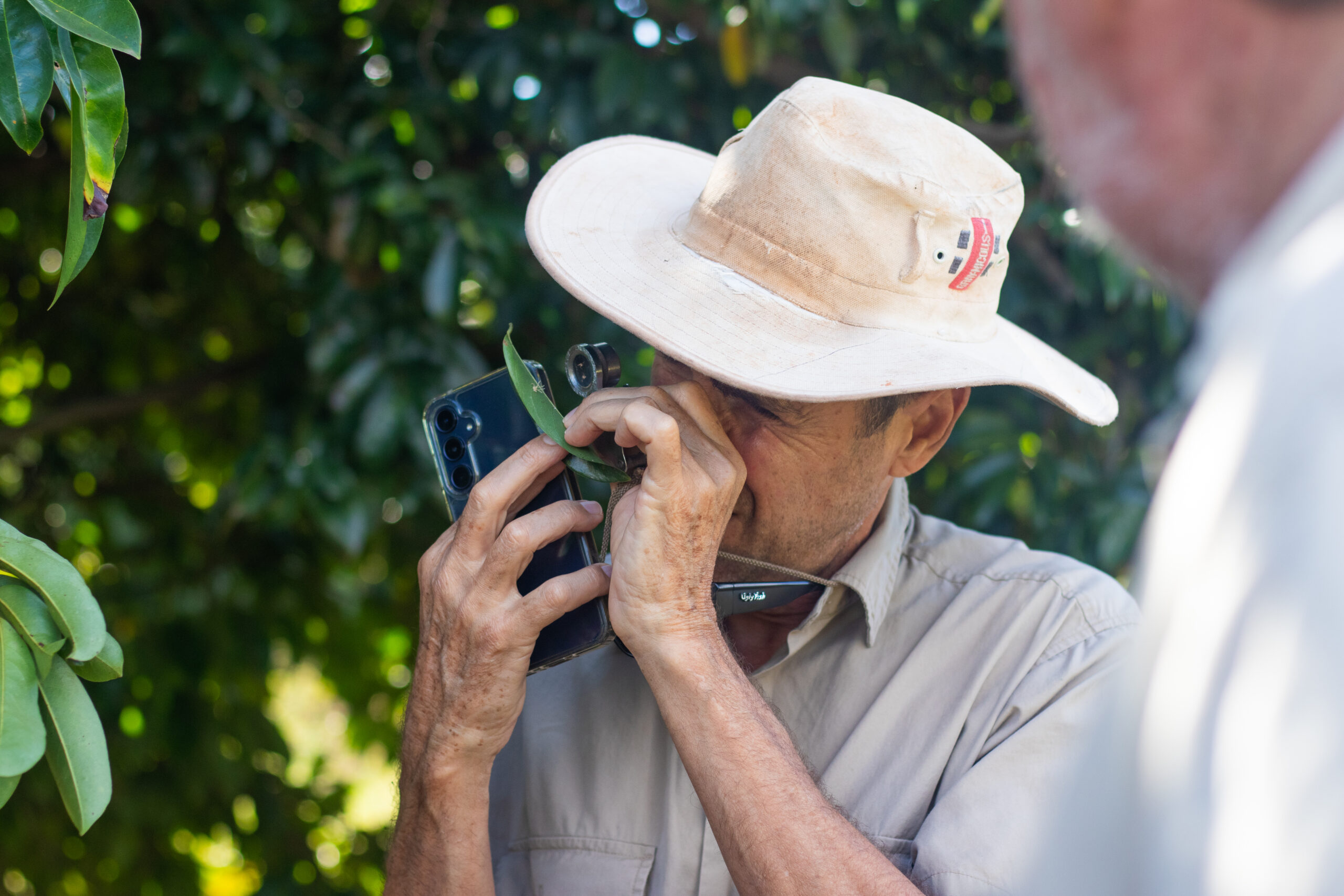
Despite our considerable difference in scale and size, insects are remarkably good at giving humans the fright of our lives. Whether it’s a cockroach in the drain or a spider in your boot, when things get buggy, we tend to get jumpy.
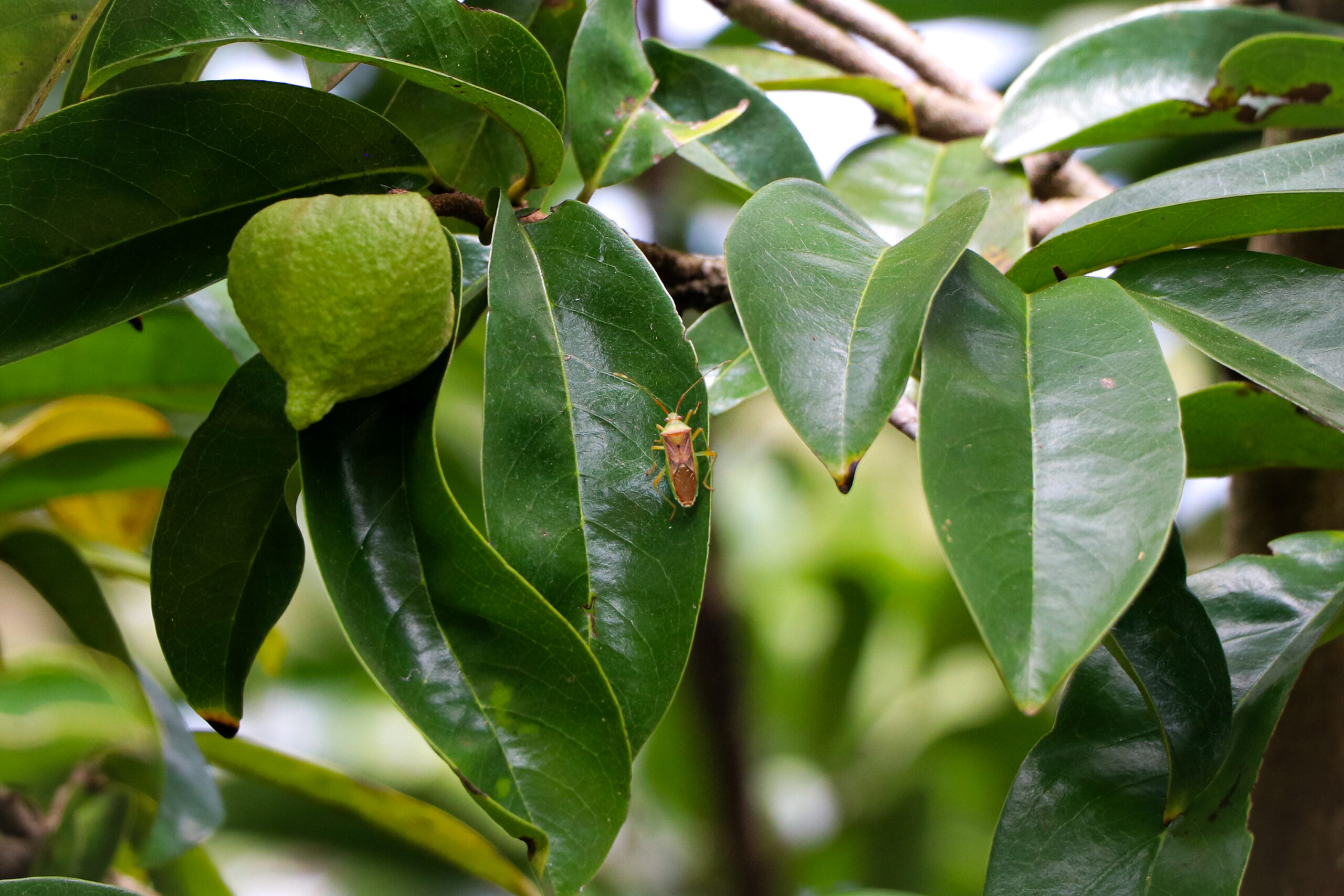
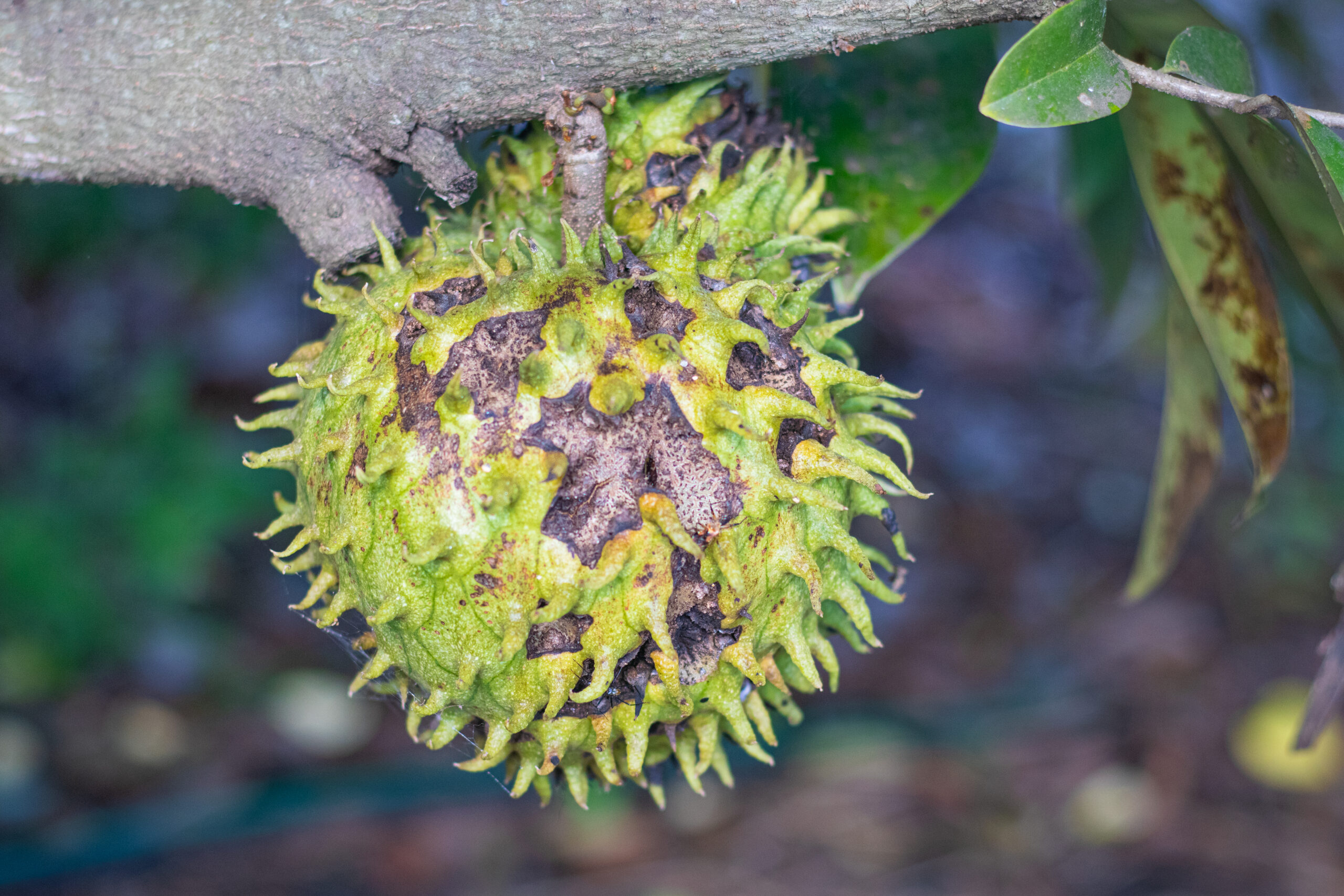
For fruit growers across Far North Queensland, however, some insects are far more than an unpleasant surprise. Hidden amongst orchard canopies, the banana-spotting bug (Amblypelta lutescens lutescens) has been quietly damaging valuable crops for decades, leaving scars beneath the skin of avocado, citrus, mango, passionfruit, custard apple and more.
Recent industry estimates suggest fruit spotting bugs can cause crop losses of up to 90 per cent in avocados and more than $20 million in annual losses to Australia’s macadamia industry alone through both rejected product and reduced yields.
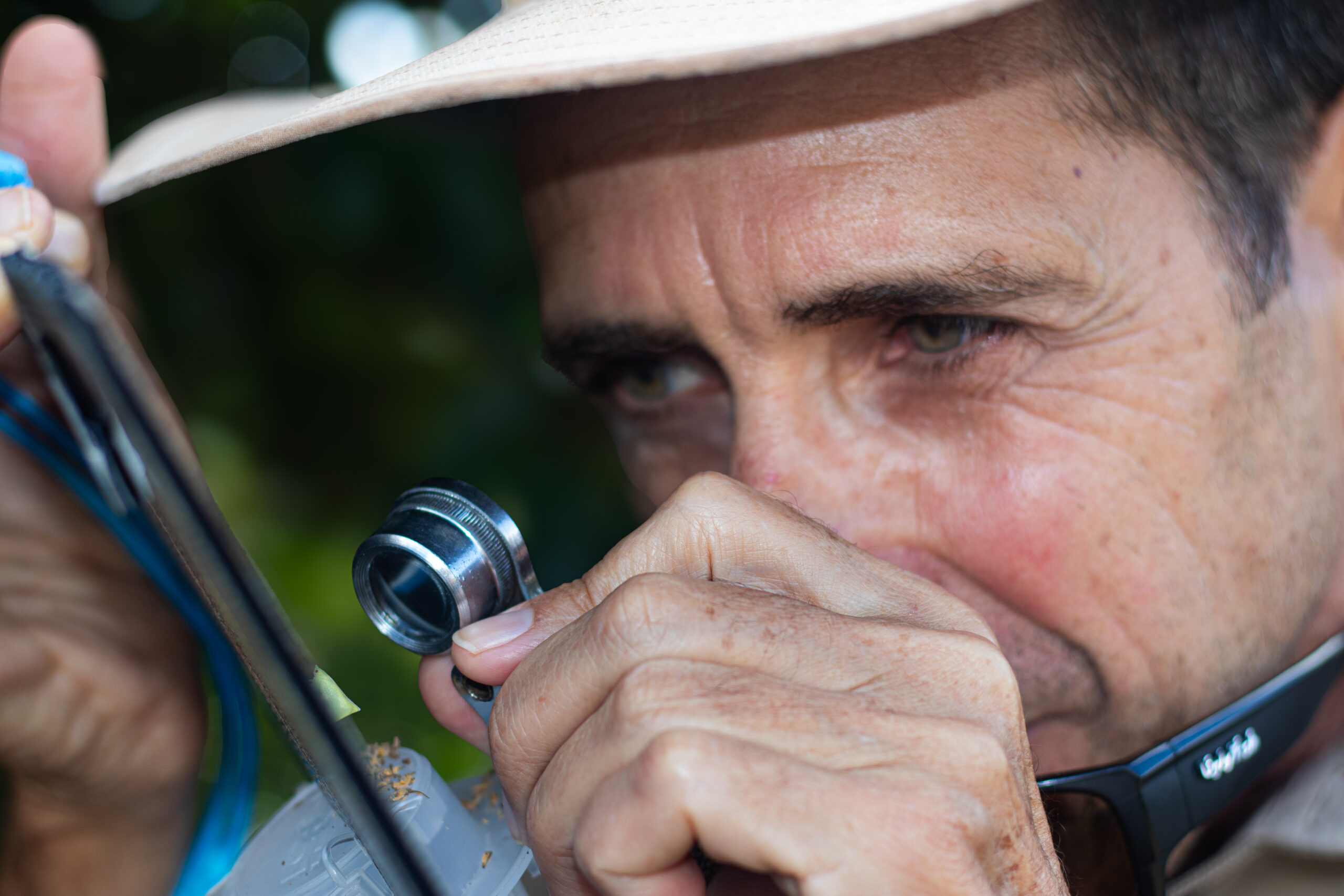
Integrated Pest Management (IPM) consultant Jeff Watson has spent years helping growers understand and manage the elusive pest. While the insect itself is rarely seen, the damage it leaves behind can have serious consequences for fruit quality and farm profitability.
So make a dash for your passionfruit and embargo your avocados – let’s meet one of North Queensland’s most notorious orchard pests.
An invisible offender
Many orchard pests announce their arrival with chewed leaves, visible insects or obvious signs of damage, but the banana-spotting bug takes a different approach.
Spending much of its time concealed amongst dense foliage, the insect can be notoriously difficult to detect, even for experienced growers. By the time symptoms begin appearing on fruit, the destruction has often already been done.
“They’ll hide from you in the trees and are quite elusive – they see you coming and they’ll duck around the other side of a leaf,” Jeff explained.
“So the first thing that people usually see is the damage rather than the bug. It’s not until the fruit develops a lesion and starts to sink or change colour that you can see there’s damage.”
And unlike pests that chew leaves or tunnel directly into fruit, the banana-spotting bug feeds using a needle-like mouthpart known as a proboscis, which injects enzymes into plant tissue and allows access to nutrients beneath the fruit surface.
“They use the enzyme to help them feed, and that leaves a big scar inside the fruit under the skin,” Jeff said. “Anyone who’s cut an avocado and found those little stones underneath the skin – that’s fruit spotting bug feeding.”
This ability to operate largely unnoticed is one of the reasons the pest remains such a challenge to manage. Growers may not realise there is a problem until fruit begins showing signs of injury weeks after feeding has occurred or, in some cases, until harvest itself.
And migration habits only compound the difficulty of managing insect numbers.
In North Queensland, breeding occurs continuously year-round, with females capable of laying more than 150 eggs during their lifetime. On top of numbers constantly replenishing, nymphs and adults are highly skilled at moving into orchards even after spray cycles, making their impact a landscape-scale issue.
Even highly effective spray programs struggle to overcome treatment and reinfestation, as insects move in from surrounding vegetation and alternative host plants.
“When we spray in the orchard, we control the ones that are in there,” Jeff said. “But any bugs flying in from outside are immigrating into the block. A few weeks later, you’re going to have to spray again, no matter how good a job you did the first time around.”
While insecticides remain an important management tool, repeated applications can have unintended consequences. One concern is the impact on beneficial insects that naturally help suppress other pest species.
Protecting natural enemies from spray cycles
For advocates of IPM, the challenge is finding ways to control key pests like banana-spotting bug while preserving the beneficial species that help keep orchard ecosystems in balance.
When spray cycles remove beneficial insects and render them collateral damage, secondary pests can increase unchecked, resulting in a phenomenon known as pesticide disruption. Jeff explained it in the simplest of terms:
“One of the consequences of all the spraying is that we’re probably killing natural enemies for other pests,” he said.
These natural enemies – species that help regulate pest populations through predation or parasitism – may be the very insects capable of keeping the banana-spotting bug in check, alongside chemical control.
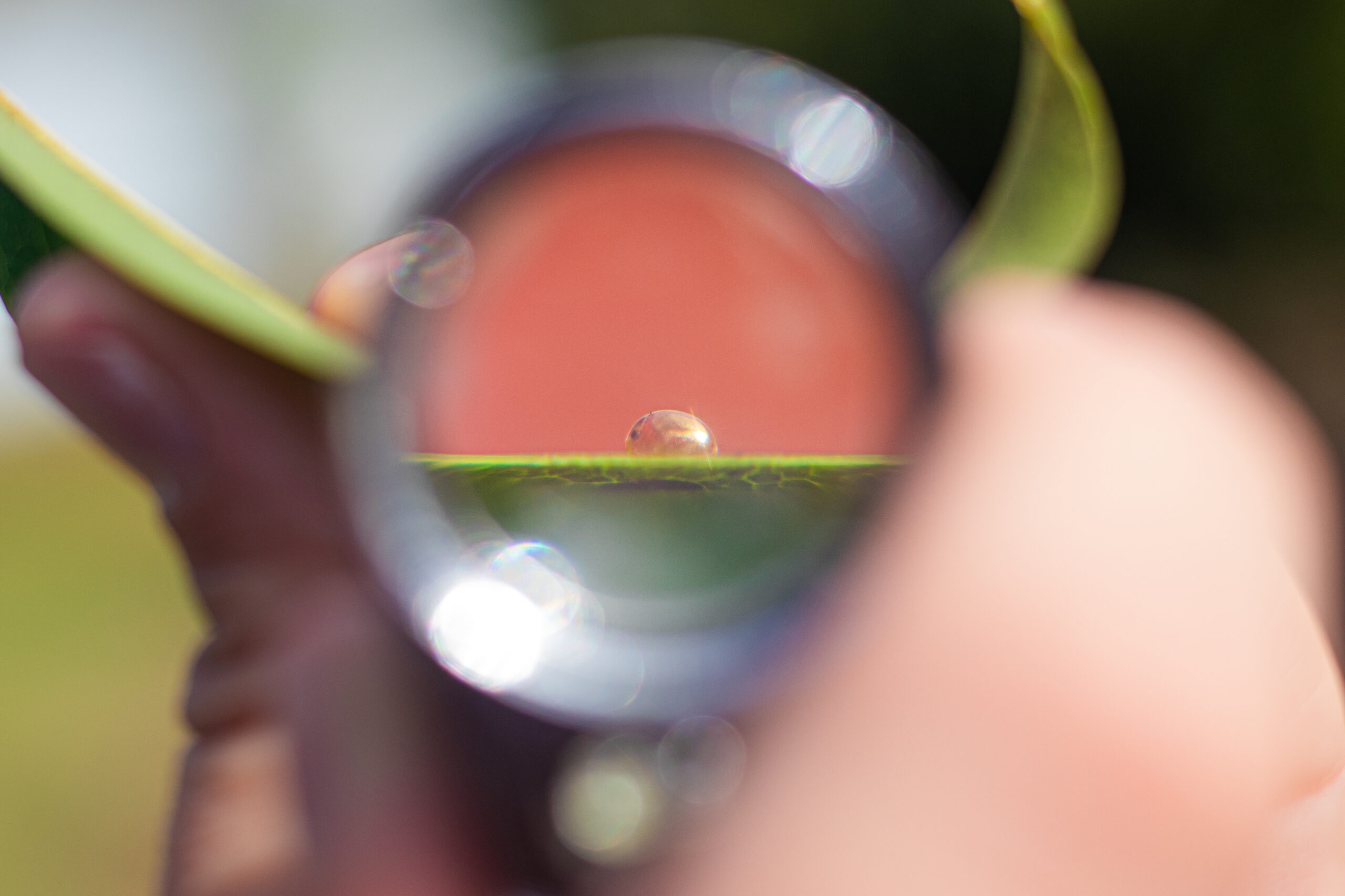
For example, across Far North Queensland, a range of tiny parasitoid wasps are already targeting spotting bug eggs in orchards and surrounding vegetation. Rather than attacking adult insects, these wasps lay their eggs inside those of the banana-spotting bug. The developing wasp larvae consume the contents of the host egg before emerging as adults. It’s a process that sounds more like science fiction than agricultural pest management.
“They were inspired by insects, the Alien movies,” Jeff laughs. “Bursting out through the skin of a living creature and stuff, they do that too.”
While the comparison is dramatic, it highlights the remarkable efficiency of parasitoid insects.
“I’ve had four or even five little wasps come out of a single spotting bug egg,” Jeff said. “That little wasp has to go through its entire larval stage inside that egg – that’s the only resources it has.”
Research is currently investigating whether boosting populations of these beneficial insects through strategic releases could help suppress spotting bug populations across the wider landscape.
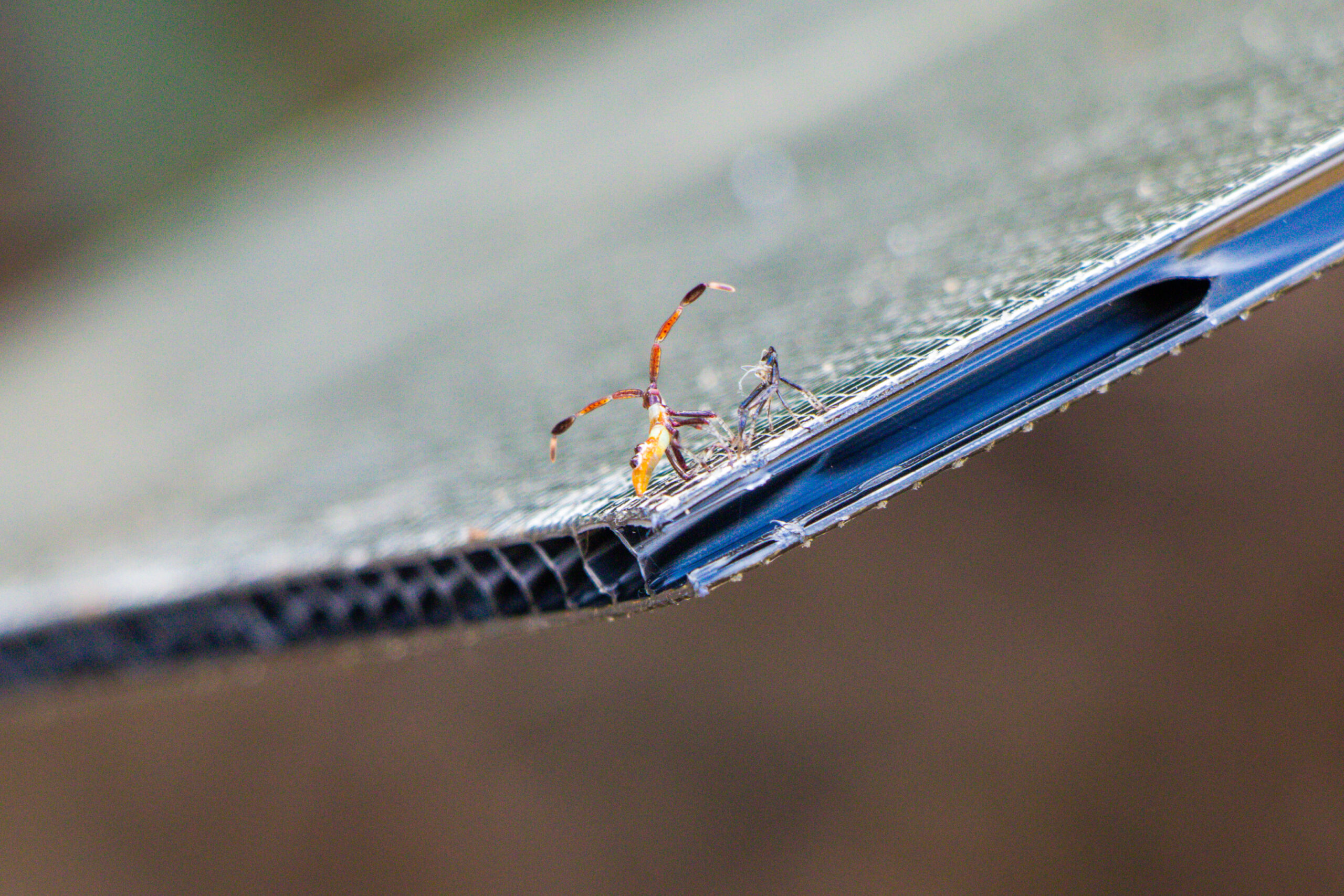
While Anastatus, a commercially available egg parasitoid, is already attracting much attention, Jeff detected another potential species emerging from egg cards placed in orchards he’s recently assessed. Despite appearing relatively common, the insect has not yet been formally identified, suggesting that the most exciting discoveries could still be waiting in the wings.
“Sometimes Anastatus would come out, but there was a whole lot of this other species as well,” Jeff said. “It’s hard to find people who are knowledgeable about identifying one-millimetre-long wasps!”
The discovery serves as a reminder that orchard ecosystems still hold many secrets, and that some of the most important allies in pest management may be species we don’t yet fully understand.
The future of Integrated Pest Management
As established, IPM aims to reduce reliance on broad-spectrum insecticides by combining targeted spraying with monitoring, biological control and a better understanding of orchard ecosystems.
And so, Jeff believes the future of banana-spotting bug management lies not in eliminating sprays, but using them more strategically.
“It’s a key pest, so if we could achieve control of that without spraying insecticide every fortnight, it would be a major step forward,” he said. “It’s about knowing what you’re spraying for and making good choices of products to use and when to use them.”
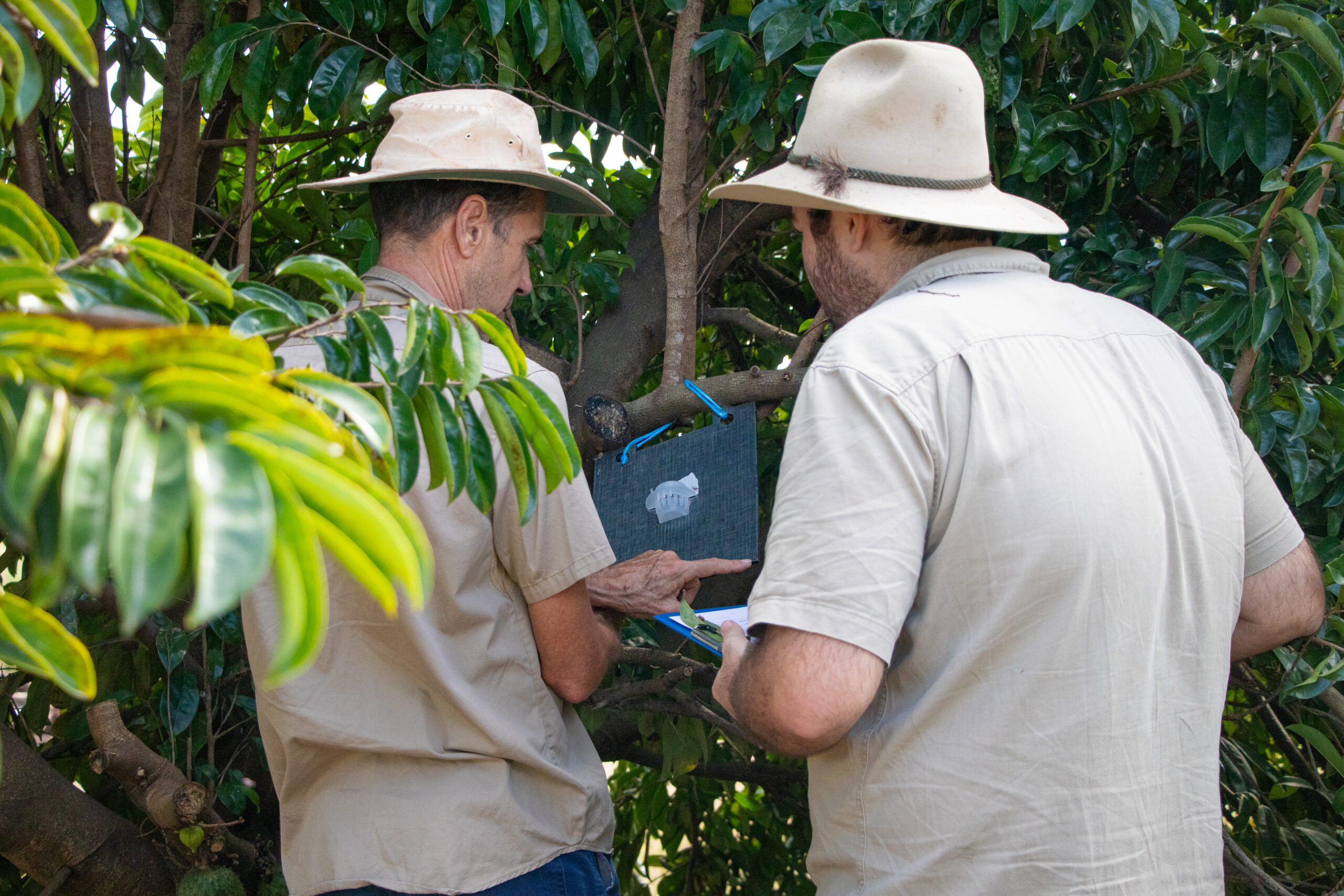
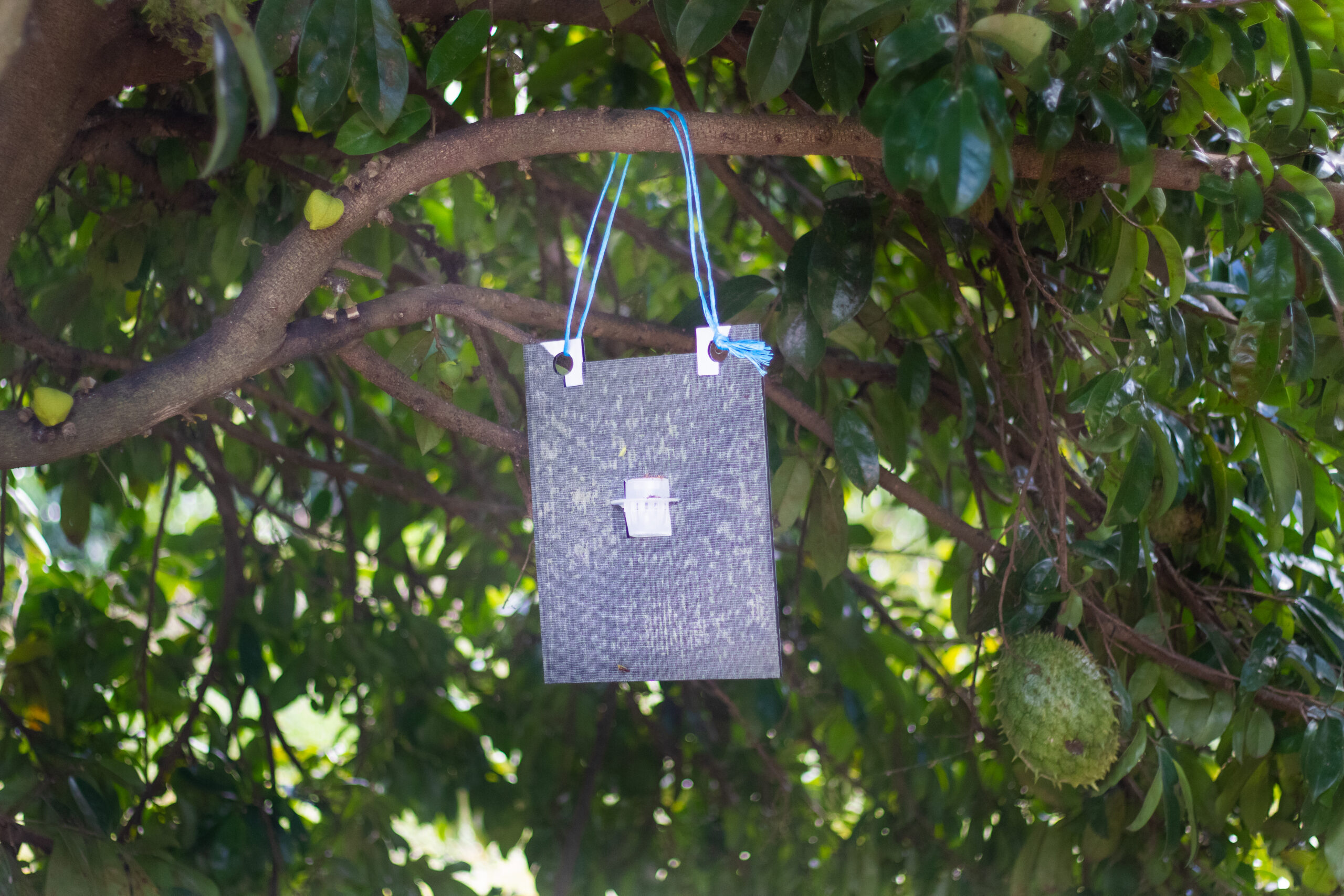
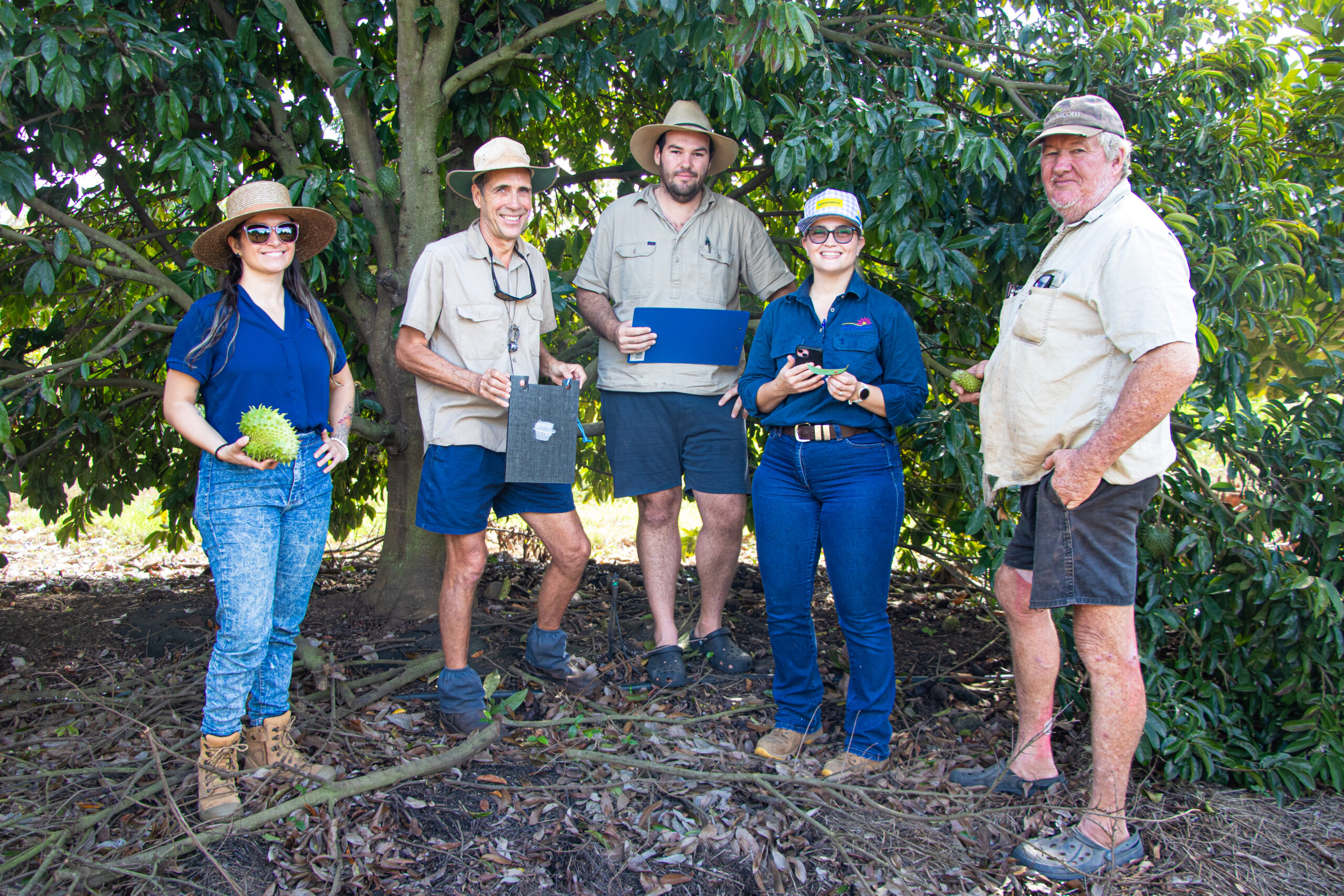
That philosophy is already shaping new on-ground efforts. At Jennings Farm in Mareeba, Gulf Savannah NRM’s Climate-Smart Agriculture Project established a demonstration site to test pheromone lure technology as a tool for monitoring banana-spotting bug populations.
While the lures proved more effective for detection than direct control, the trial contributed valuable insights into how growers might make more informed management decisions in the future.
And so, while growers have fought banana-spotting bugs with spray rigs and persistence for decades, the next breakthrough may come not from a new chemical, but from a deeper understanding of these ecosystems themselves.
As we speak, somewhere hidden among the leaves and fruit of the crop canopy, tiny parasitoid wasps are already waging their own war against one of Queensland’s most troublesome pests.
The challenge now is learning how to help them win.
This Project is supported by the Australian Government through funding from the Natural Heritage Trust under the Climate-Smart Agriculture Program.