
STORY BY LYDIA STROHFELDT
On Wetherby Station, cattle grazing now co-exists with ecological restoration, as native birds, trees, and wetlands reclaim the landscape. Through decades of innovation and shifting values, graziers like John Colless are redefining stewardship, showing how Queensland’s livestock industry can nurture both productivity and biodiversity.
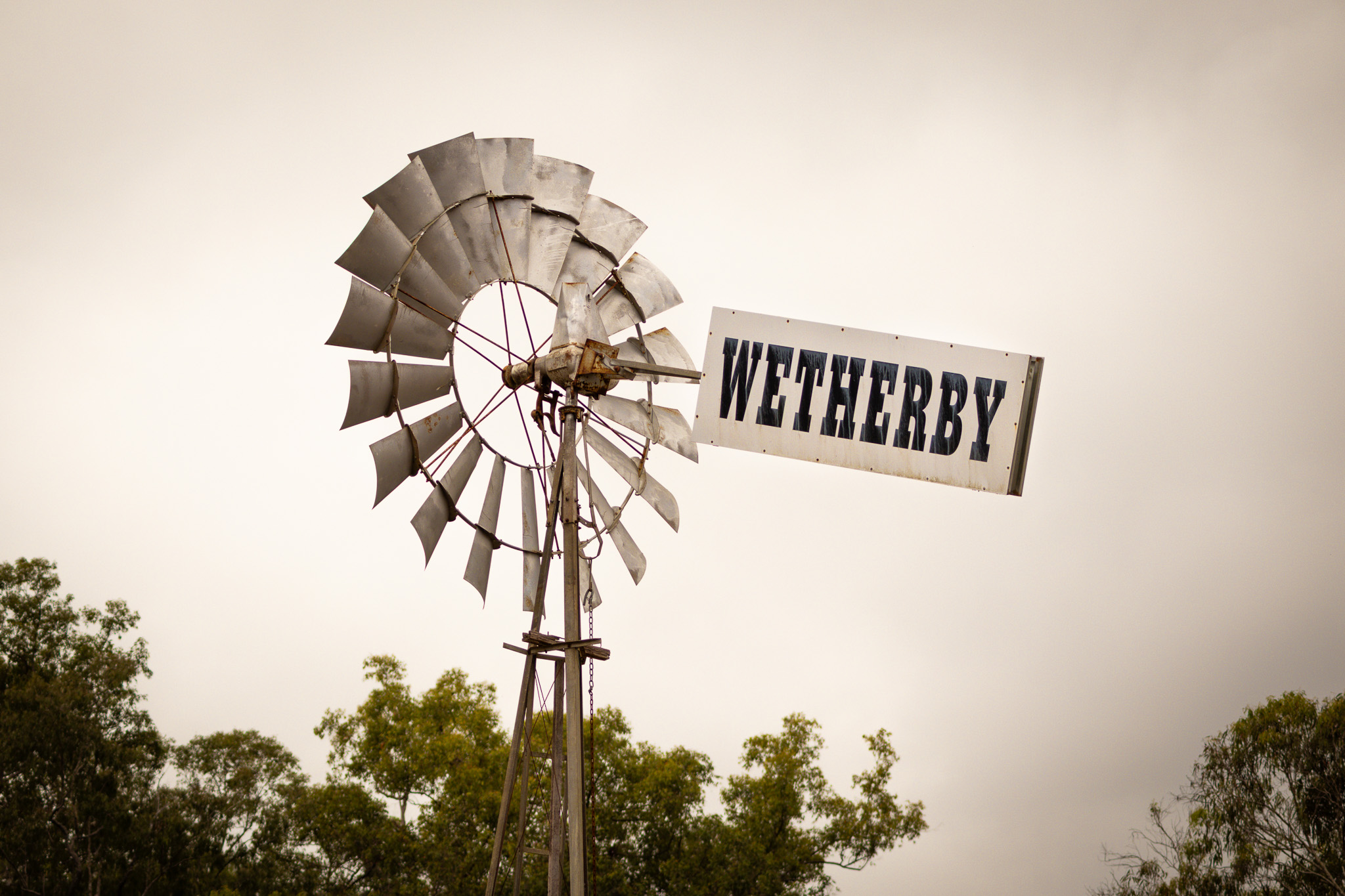
On Wetherby Station, just north of Mount Molloy on Djabugay Country in Far North Queensland, cattle grazing now co-exists alongside ecological restoration, revegetation and land management practices centering the environment it depends on. Here, birds return to roost, native trees reclaim open sky, and the adjacent wetland becomes synonymous with Australian biodiversity in abundance.
Landholder John Colless has run Wetherby as a commercial cattle station with his family for more than 20 years. Established in 1878, the property has passed through many hands, each forging an ethos for working with the land.
For 20th-century owners Maurice and Elizabeth de Tournour, that ethos took the form of agricultural innovation. Their involvement in founding the Australian Brahman breed contributed to herd improvement across North Queensland, introducing sturdier cattle with greater tick resistance and heat tolerance.
For John and his generation, the legacy is expressed differently: through environmental stewardship, conservation values, and the nurturing of a new culture for cattle grazing.
Graziers as stewards: a culture in transition
With livestock production operating across roughly 80 per cent of Queensland, it is undeniable that graziers play a significant role in land, water and climate management.
Until more recent years, however, the symbiotic relationship between agriculturalists and the land they rely on was almost taboo. John got candid about this reality, confessing how deeply entrenched clearing once was for graziers.
This anecdotal observation is grounded in historical data.
According to the 2021 State of the Environment Report, between 7.7 million hectares of land for terrestrial threatened species was cleared or degraded between 2000 and 2017. Despite this devastating figure, recent research reflects a positive shift. The most recent Statewide Landcover and Trees study found the number of hectares cleared for industry across Queensland was down by 51 per cent in 2022-23 compared to previous years.
Today’s conservation mindset is therefore perhaps best understood in contrast to the approaches that once defined cattle grazing.
“I reckon graziers, land managers and stewards, are greener than greenies! Most of the guys and gals I know who are involved with the land, love the land,” John said.
“We don’t tie ourselves to trees, but a lot of people running properties are very interested in [conservation]. Certainly, NGOs like Gulf Savannah are doing a great job in communicating the tools we’ve got to do it. One of them is not to run around with a bulldozer pushing trees over; lock country up, don’t flog it. I think that culture is coming through.”
Wetherby Station emerges as a conservation case study
As managers of large areas of land, graziers are essential stakeholders for mitigating environmental harm and driving meaningful change at a landscape scale.
But for caretakers of the land, daily work is shaped by constant negotiation: between weather and workload, productivity and protection, tradition and innovation. In that balancing act, change can feel daunting, like something to pursue only when conditions align.
At Wetherby Station, John and his family didn’t wait for the perfect moment. They’ve built a conservation model grounded in two pillars: community involvement and wildlife-friendly technology.
That approach was on full display in April 2025, when Wetherby’s usually quiet paddocks filled with students from Mount Molloy State School, Kuku Djungan Murtiki rangers, and volunteers from Trees for Evelyn and Atherton Tablelands (TREAT). Over two days, the group planted 1,200 trees to restore native vegetation around the wetland – turning a routine working landscape into a shared site of regeneration.
Biodiversity Officer and project lead Océane Dupont said the event created space not just for planting, but for perspective.
“Our project doesn’t address grazing directly, but is more about realising that if you have an area that’s not extremely productive, it won’t harm your business to protect it,” Ms Dupont said.
“There’s no area too small – even if you can protect a little bit and make it better for the wildlife, that will attract so many benefits for the business and for yourself.”
Still, effective restoration isn’t as simple as putting trees in the ground. The benefits depend on careful decisions – where to plant, what species to use, and how those choices fit within the broader ecosystem. Done hastily, even well-intentioned efforts can disrupt local biodiversity.
At Wetherby, that caution shaped the process. First Nations rangers carried out vegetation surveys, and only after key species were identified did planting begin.
“Instead of just plonking trees in, they’re built into the landscape,” John said. “A bit of planning goes into it!”
And that planning doesn’t end with the trees themselves. It extends to the animals that rely on them, and the risks they face moving through the property.
Through his work with the local bat hospital, John has become acutely aware of those dangers. He learned that around 80 per cent of injuries treated there are caused by barbed-wire fencing – a confronting figure that reflects a much broader issue.
Environmental organisations estimate that thousands of native animals die each year after becoming entangled in fences, succumbing to injury, starvation or predation. Tawny frogmouths, owls, flying-foxes, possums, gliders and koalas are among the most frequent victims, particularly as barbed wire becomes almost invisible at night.
Rather than accepting this as an unavoidable cost of grazing, Wetherby has begun transitioning to wildlife-friendly fencing.
In practice, this means replacing barbed wire with smooth or double-strand twisted wire – making fences more visible to animals in flight and safer to navigate. The goal is to reduce harm without compromising stock control.
For John, the shift is about more than risk reduction.
“It’s to give a little bit of Australia back to nature,” he said. “The jabiru, jacana, darter and whistling duck – there’s a whole range of bird life that comes in, as well as flora. We’re getting the balance to come back.”
Why wetlands matter
Smelly, sludgy and often overlooked, wetlands have long been misunderstood. Frequently dismissed as places where things decay rather than thrive, swamps, mangroves and marshes are still seen by many as landscapes to avoid or control.
In reality, their complexity is part of the challenge. Unlike more managed environments, wetlands don’t easily conform to human design. Their shifting water levels, dense vegetation and natural processes can make them difficult to work with – highlighting that effective stewardship is less about control, and more about understanding how these systems function.
Despite the misconceptions, Ms Dupont recognises their value. She explains the powerhouse of services they provide.
“Wetlands play a vital role in the water cycle,” she said. “They hold water in the landscape, recycle nutrients and provide habitat for many species – not only aquatic life, but birds too.”
“Wetlands deliver essential ecosystem services locally, and are also globally connected through the carbon and nitrogen cycles. Even small wetlands like Wetherby contribute to groundwater that flows all the way to the Gulf of Carpentaria, sustaining fish populations out west. Water travels much further than we realise.”
In agricultural landscapes, these services take on a more immediate meaning. Wetlands act as natural sponges, holding water in the landscape during wet periods and releasing it slowly through dry spells – a quiet but critical buffer against drought. They also trap sediments and nutrients, improving water quality for ecosystems, livestock and downstream environments alike.
At Wetherby, this has translated into a landscape that holds onto water for longer after rain, and one that is steadily drawing wildlife back in.
Yet despite their value, wetlands remain under pressure. An estimated 85 per cent have been lost globally over the past 300 years, largely due to land clearing, urbanisation, pollution and invasive species – a decline that has stripped away many of the natural systems that sustain both biodiversity and productive land.
It’s a statistic that underscores how urgently wetlands need protection, and how much opportunity remains for landholders willing to work with them, rather than against them.
Ms Dupont emphasises that Wetherby needn’t be an outlier, nor its success confined to one property.
“John is an example of a grazier who realises the benefits and can hopefully inspire others,” she said. “It’s hard to copy and paste exactly throughout our region, but there are principles that can be applied everywhere.”
If those principles sound simple, that’s because they are: pay attention to the landscape, and give natural systems the space to recover. For John, the results speak for themselves.
“When you take the cattle pressure out, mother nature is a great healer. We’ve put a fair bit of work into it, now she’s going to put a lot of effort into it.”
This project is funded by the Queensland Government’s Department of Environment, Tourism, Science and Innovation through the Community Sustainability Action Grants Program.