
Regional councils and NRM organisations are teaming up to address one of Australia’s most pressing pest issues: feral pigs.
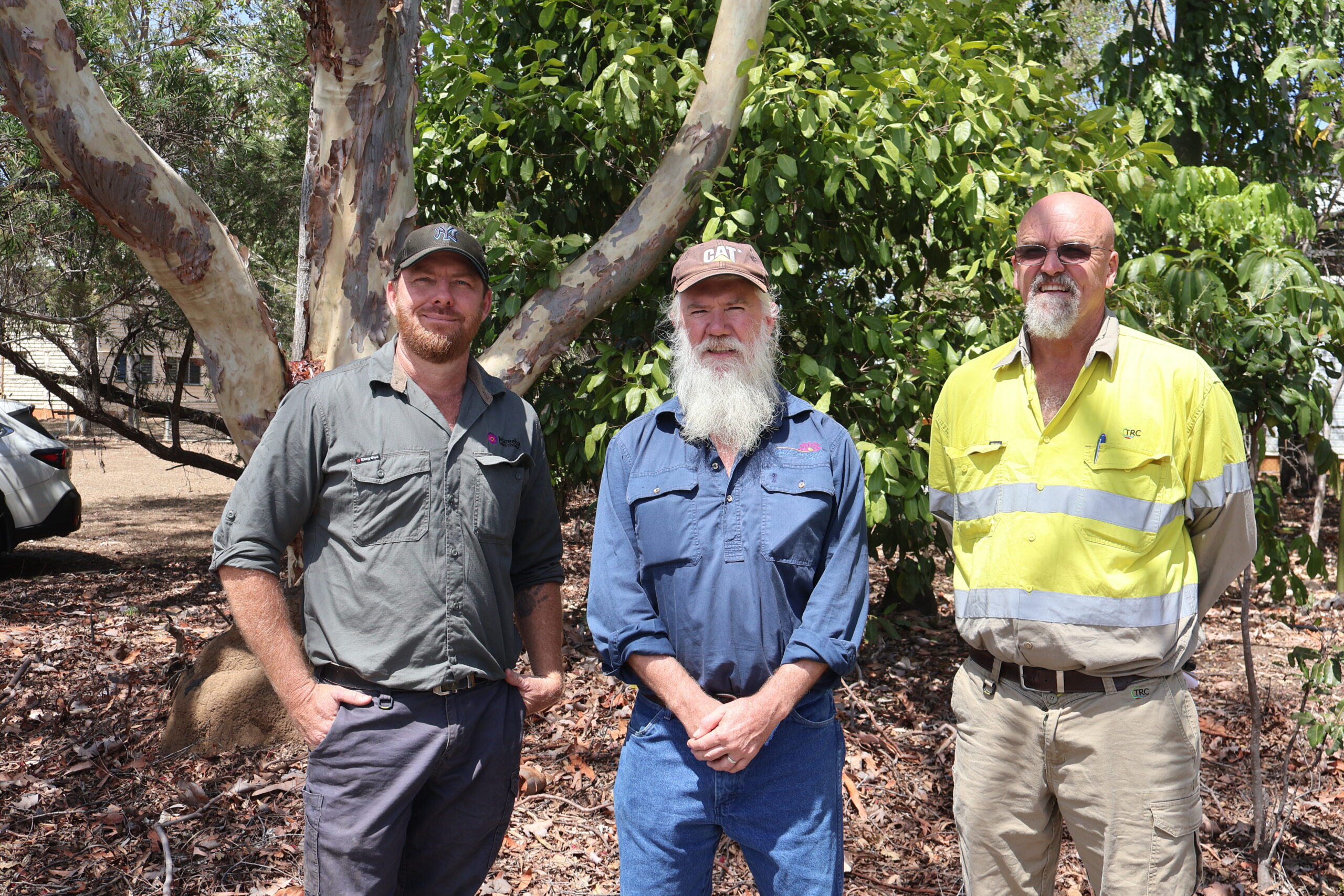
Mareeba Shire (MSC) and Tablelands Regional Councils (TRC), alongside Gulf Savannah NRM (GSNRM), are sharing equipment, costs, knowledge and hands-on experience to achieve coordinated control and reduce pig numbers across 60,000 km² of local land.
GSNRM Biosecurity Officer and Feral Pig Coordinator Scott Morrison stresses the importance of collaboration in managing a pest that knows no boundaries.
“Pigs will go wherever the resources are, so that’s often over multiple tenures,” Mr Morrison said.
“If we are going to have successful control, we need to implement a number of methods throughout the year, and work with neighbouring landholders and organisations to achieve a big impact over a big area.”
MSC Land Protection Unit Coordinator Graham Wienert highlights the region’s specific vulnerabilities, pointing to the impacts pigs have on both biodiversity and agriculture.
“Feral pigs pose a significant risk to the environment in the wet tropics … all the way out to the dry grazing lands, as they’re a major worry for foot-and-mouth disease spreading,” Mr Wienert said.
“Mareeba Shire also has a large cropping area, including sugar cane, mangoes, avocadoes and bananas — because of the large food sources in the area, pig numbers explode if not managed properly.”
Measuring the cost
The impact of unchecked pig numbers is not just theoretical — it is already being felt in real economic terms.
A 2020 report by Synergies Economic Consulting found feral pigs cost crop farmers in the Whitsunday region $4 million a year, with curbed productivity and infrastructure damage accounting for the greatest losses.
While the full impact hasn’t been officially quantified in our region, Northern Queensland’s extremely high feral pig numbers suggest economic losses could be very significant.
Predation, habitat degradation, competition and disease transmission by feral pigs was also listed as a key threatening process to ecological communities under section 168 of the Environment Protection and Biodiversity Conservation Act in 2002.
Though more than 20 years have passed since its publication, the number of native species threatened by pig activity only continues to grow.
In response to such diverse and devastating impacts, Mr Wienert elaborates on the value of a coordinated approach.
“One control method doesn’t suit all areas: sometimes trapping is needed, sometimes baiting is needed, sometimes shooting is needed,” he said.
“We try to cater to the different needs of different areas … so we decided to get in together, get the job done, and hopefully get a good outcome.”
Technology is therefore also a key component: central to MSC, TRC, and GSNRM’s efforts is the loaning of equipment, including PIGBAITTA stations.
Tech meets teamwork
Ken Goleby, TRC’s Senior Land Protection Officer, says the “toolbox for catching pigs” has boosted efficiency and effectiveness.
“The technology is getting better and better, so the job is getting a little bit easier,” he said.
“You used to have to sit up all night and set a trap off somehow, but now it’s all done easily by phone [and satellite].”
“The way we’re moving forward with feral pig control — that collaborative grouping of people to get results — is a great model I’d like to see more of.”
Strategic coordination at regional, state and country levels is a recurring priority throughout the National Feral Pig Action Plan 2021 – 2031, with collaboration between landholders and councils highlighted as essential for progress.
Last year’s appointment of feral pig coordinators across six Queensland regions, hosted by NRM organisations throughout the state, continues to encourage local governments, graziers, Indigenous rangers and farmers to participate in feral pig control activities.