
STORY BY TANYA SNELLING
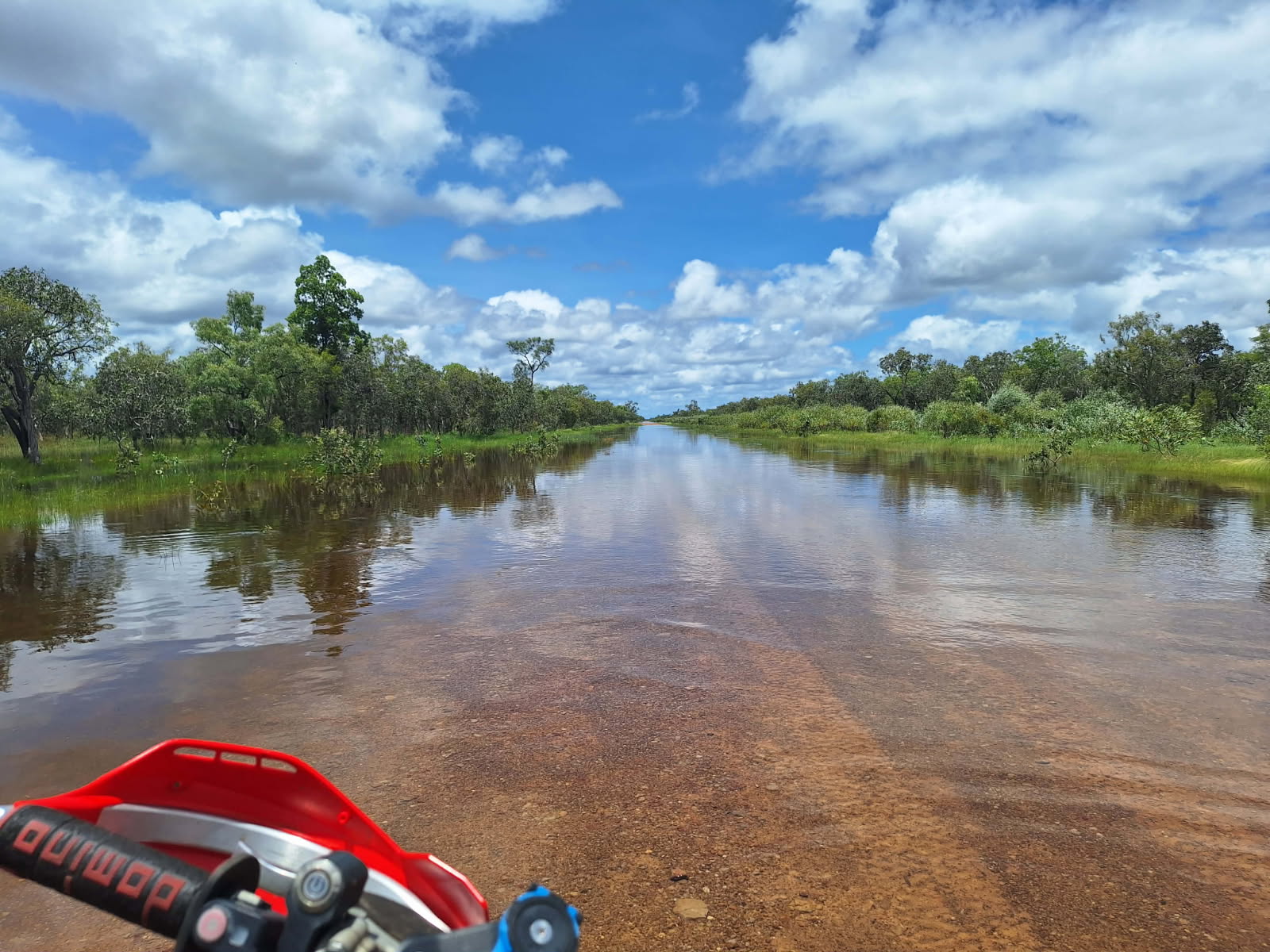
The wet season is something Gulf producers prepare for each year, but while much of the country welcomed 2026 with fresh plans and resolutions, graziers across the region were setting very different goals, moving cattle to higher ground and watching rivers rise. Months on, as floodwaters continue to recede, many still do not know how many head were lost or what this season will ultimately cost.
Wet season preparation is part of life in northern Australia. Cattle are shifted ahead of rising rivers, upstream rainfall is monitored closely, and isolation is factored into every decision long before the monsoon sets in. But this season tested even the most experienced multi-generational producers, as catchments across the Gulf of Carpentaria, from the Norman and Gilbert to the Flinders and its tributaries, moved together under sustained rainfall.
This year the wet season arrived early and with force. In late December, a monsoon trough delivered widespread rainfall across northern Queensland, with weekly totals ranging from 50 to 400 millimetres across large parts of the north and more than 100 to 200 millimetres recorded along sections of the southern Gulf coast. As successive systems fed into already saturated catchments, it pushed major Gulf rivers into flood well before the traditional February and March peak.
For Ashley Gallagher at Sawtell Station in the Norman River catchment, near the town of Normanton, the shift from preparation to response came quickly. He runs around 800 breeders across 80 square miles of country, alongside his father and brothers. Flooding is familiar territory, but the persistence of this event is taking its toll. “The water didn’t get as high as 2009 or 1974,” he says, referring to the benchmark floods still spoken about across the Gulf, “but it’s very similar”.
At one stage close to 60 percent of Sawtell was underwater and today, almost two months on, around 35 percent still remains that way,” Mr Gallagher explains. Cattle have been pushed onto shrinking pockets of higher ground, intensifying grazing pressure, while elevated water along river country has increased crocodile activity.
There is not a hope I would walk them off an island now,” Mr Gallagher adds. “One day when we hit the water, there were four big saltwater crocodiles just waiting. I have never seen as many crocs as I have this year.” For the herd that was moved to higher ground, Gallagher says the “country has copped a caning”. “The grass wouldn’t even be two inches high when it should be a foot and a half.”
As water crept higher over several weeks, Mr Gallagher says downstream at the bottom of the catchment, reliable upstream river readings remain critical to flood preparedness. “We didn’t have much warning for this flood event. If a gauge 60 kilometres upstream goes under, we know at best we have 36 hours,” he says. “That is not a lot of time to muster cattle. And this time, most of the upstream gauges weren’t operational, so we were ringing around neighbouring properties trying to work out what was coming.”
Further east, Matthew Kennedy was managing two very different flood scenarios. At Lake Carlo on the Gilbert River floodplain, water was rising quickly and ran deep, narrowing the response window. “At best we had 24 hours until the peak and only 10 hours to move cattle to higher ground,” Mr Kennedy says. “You can’t fly at night, which reduces the window considerably. The peak was higher than 2009, but lower than 1974,” he explains.
Two helicopters were mobilised as soon as conditions allowed. In one crossing, cattle were forced to swim a channel around 150 metres wide. Some followed cleanly, while others baulked or turned back, prickling and bailing up when they hit submerged bushes or timber, with the choppers regrouping and pushing the mob forward again.
At Agantra Station in Croydon Shire, the flood behaved differently. There, water saturated already wet country, spreading creeks and rivers well beyond their banks and moving more slowly across the landscape. While Gallagher’s flood has been prolonged and cumulative, Kennedy’s at Agantra rose quickly and dropped fast, tearing out fencing and damaging infrastructure in its path. Between the two properties, kilometres of fencing have been destroyed and repair bills are already significant.
Mr Kennedy estimates fencing losses alone will run into the hundreds of thousands of dollars, though final figures won’t be clear until full access across the property is restored. Mr Gallagher, too, says he still doesn’t know what dams may have been breached or washed out, with some country yet to be accessed since the peak.
For farmers though, the challenges do not end when the water drains. Mr Gallagher describes the soil on his Norman River country as “somewhat self-preserving”. He laughs that while there may not be much science behind it, after prolonged inundation it seems to seal over and then dry rapidly.
“The paradox is that after weeks underwater, the ground can feel as hard as drought country,” he says. “You have had all this water, but it’s effectively in drought. There is no feed and the dams seem to dry up very quickly.”
On Mr Kennedy’s floodplain country, the experience differs. Deep inundation spreads across broad flats, and while pasture may look green as water recedes, grazing pressure and soil health determine how well it holds into the dry.
Queensland’s Department of Primary Industries (QDPI) scientist Kendrick Cox says heavy rainfall events are not unusual in northern Australia, but duration is critical. “In northern Queensland, around 80 percent of the growing season occurs in just three months but good growing conditions can easily tip over to a situation which damages pastures,” Mr Cox explains. “If water stands for longer than a few days, soils become waterlogged and plants struggle for oxygen which damages their roots.”
Reducing numbers is already on the cards for Mr Gallagher. “We will wean hard and get it done early,” he says. “We have got to give those cows the best chance of surviving. In 2009, breeders were sent away to relieve pressure. This year, similar decisions are being weighed again. When something like this happens, your plans change for the entire year,” he says.
And yet, it is not all loss. Because the heavy falls came early and were followed by additional rain, some country that was not submerged for long has responded quickly. “The silver lining is it happened early,” Mr Gallagher says.
“That follow-up rain has helped.” He explains that while dirty Flinders River water pushed across earlier in the event, the secondary flooding from the Norman helped flush that silt through, preventing long-term damage in some paddocks.
Mr Cox acknowledges that while parts of the Gulf are greening as floodwaters retreat, the difference between loss and recovery will depend on how long water stood, how heavily country was grazed while compressed and the stocking decisions that are made in the months ahead.
Support structures are also part of that recovery. For many producers, that assistance is practical rather than dramatic, including help with paperwork and guidance on applications and navigating disaster support. Mr Kennedy says access to disaster funding is critical in events of this scale. “It’s not about handouts,” he says. “It’s about getting back on your feet, replacing fences, repairing infrastructure and keeping the business moving.”
The Gulf has endured floods before, and it will again. For now, producers will continue rebuilding, recalibrating and waiting, knowing that in this landscape, preparation is constant, but control is never guaranteed.
Carpentaria Shire Council, Croydon Shire Council and Etheridge Shire Council, alongside other local councils, have been activated for Disaster Assistance Loans up to $250,000, Essential Working Capital loans up to $100,000 and Exceptional Disaster Assistance Grants up to $75,000.
For those seeking support, Industry Recovery and Resilience Officers (IRROs) from the Department of Primary Industries are available to help. In activated areas, they can assist with accessing financial support and grants, providing referrals to specialist support services and developing tailored plans for your agribusiness.
Learn more about IRROs and how to apply for loans or grants on the support for agri-business page. QDPI beef extension and grazing land management officers are available to support primary producers in northern Queensland with pasture development planning, land management and farm business resilience.