
Healthy soil underpins around 95 per cent of the world’s food production, making it one of agriculture’s most valuable assets. A soil test can be one of the most useful tools for landholders, yet understanding the results can be a challenge for many growers.
Pursuit of this practical skill brought growers together near Glen Russell in early July for the second workshop in the Orchard Resilience – Tropical Roots FNQ Grower Program, where participants explored how to interpret soil reports and apply the results on their own properties.
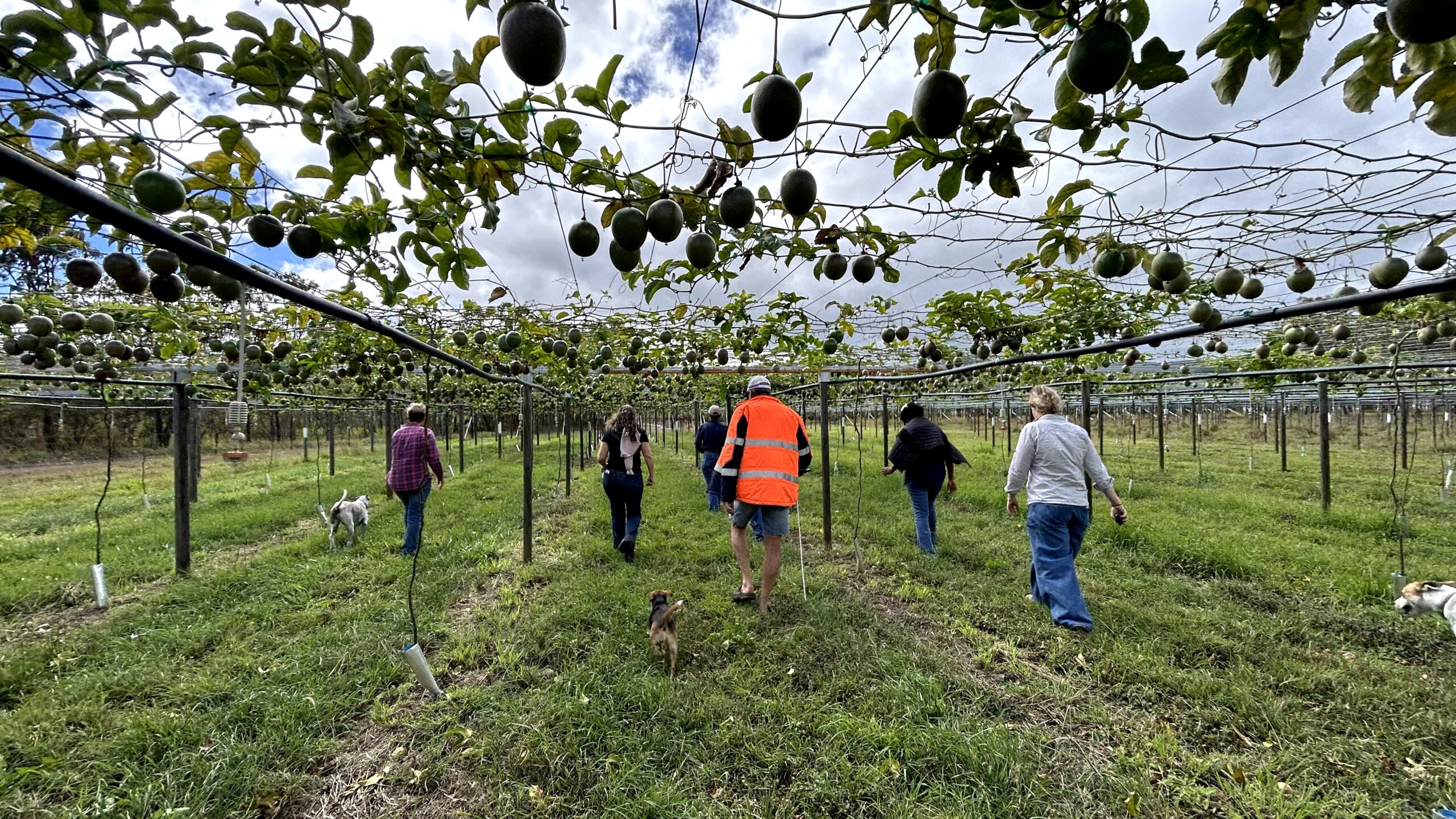
Hosted by Keith and Kylie Ewart at their passionfruit and mango orchard, the workshop combined classroom learning with hands-on demonstrations, helping growers connect soil science with everyday management decisions.
“A lot of growers have a folder full of soil tests but aren’t sure what to do with them”, Gulf Savannah NRM Agriculture Officer Janani Gedara said.
“This session was about giving them the confidence to read those results themselves and turn them into decisions that actually work on their own orchards.”
Guest presenter Shannon Byrnes from the Queensland Department of Primary Industries guided participants through a purpose-built workbook, unpacking the key components of a soil report.
Topics included soil pH, nutrient availability, nitrogen movement and phosphorus behaviour across different soil types, giving growers a clearer understanding of what the numbers on a report actually mean.
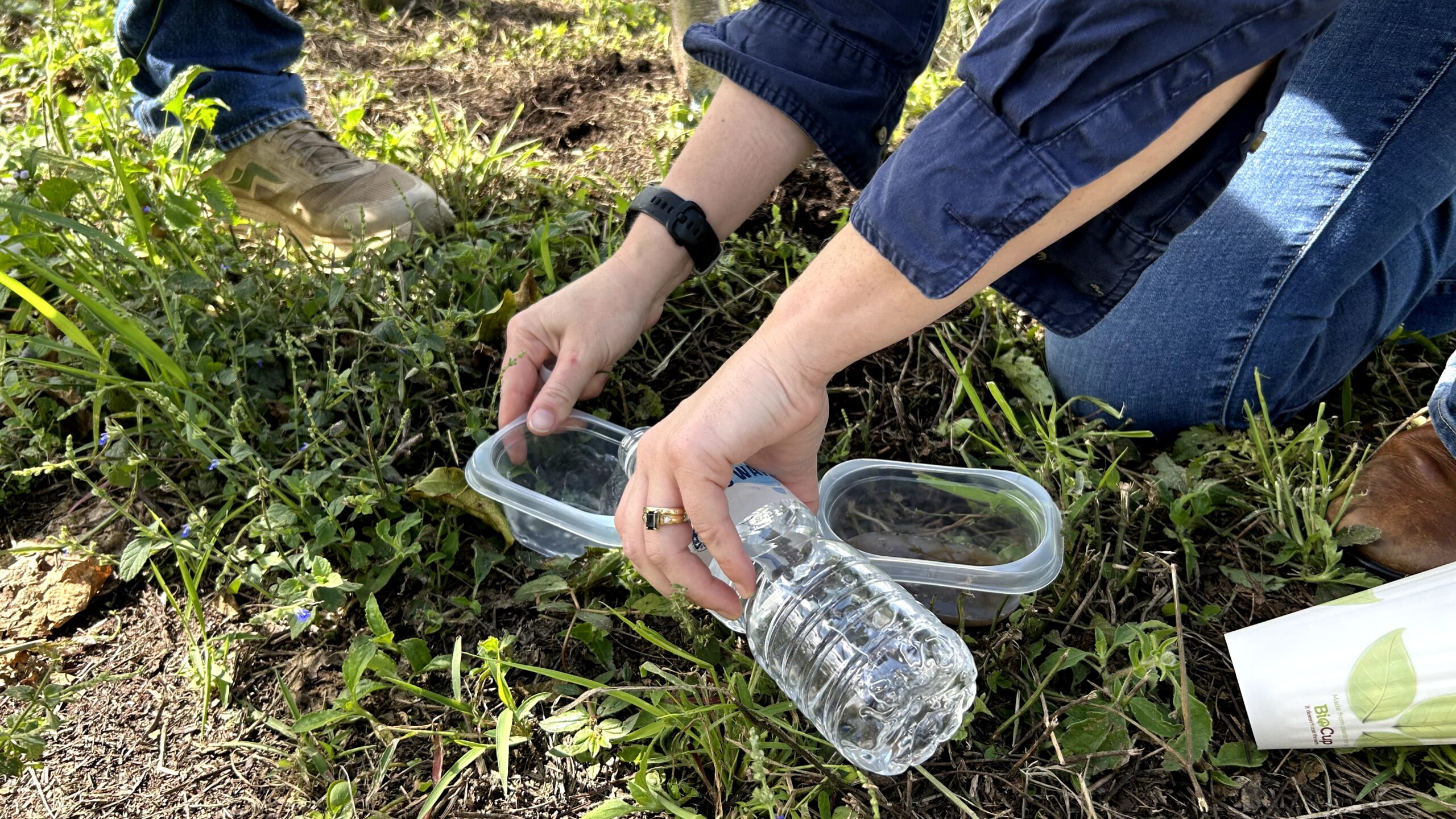
The learning continued in the orchard, where participants carried out a simple aggregate stability test using soil collected beneath the tree canopy. The demonstration showed how healthy soil biology, supported by fine roots and compost, helps build stronger soil structure that can better retain moisture and withstand disturbance.
Growers heard firsthand from the Ewart family about how their management practices have evolved over nearly two decades. By maintaining higher mulch levels and reducing herbicide use beneath the orchard, they have improved soil moisture retention and reduced irrigation from three times a week to just once.
Participants also inspected the farm’s biological fertiliser system, where blends of fish, molasses and microbial cultures are brewed on-site before being filtered and applied through the existing irrigation network.
“The best part of the day was watching growers walk through Keith and Kylie’s orchard and swap ideas about what’s working for them,” Ms Gedara said.
“That kind of learning between growers is exactly what this program is here to do.”
For many attendees, the opportunity to see another grower’s operation and discuss what works in a practical setting proved just as valuable as the technical content.
As growers face increasingly variable seasonal conditions, understanding what’s happening beneath the surface has never been more important. Healthy soils improve water storage, nutrient cycling and resilience to climate change, making soil testing an important tool for informed orchard management.
The Orchard Resilience – Tropical Roots FNQ Grower Program continues with a free public field day at JB Citrus in Dimbulah on Tuesday 11 August, which will also be hosted by Farmacist Program Leader Will Higham. The event will explore the role of soil biology in orchard systems and is open to growers, landholders and industry representatives. If interested, you can register for the event here.
For more information on how to interpret soil test results we have produced a handy fact sheet. Visit gulfsavannahnrm.org – Understanding Soil Tests Guide to read the fact sheet.
The Orchard Resilience Project is jointly funded through Soils for Life and the Australian Government through funding from the Climate-Smart Agriculture Program under the Natural Heritage Trust.