Let’s breakdown what’s happened with the weather, and the communities impacted out West
Words by Many Pickering, Sustainable Agriculture Facilitator
December – January flooding across the Gulf Savannah Region
Communities across the Gulf Savannah and Northwest Queensland experienced a major flooding event beginning on 29 December 2025, following days of intense monsoonal rainfall across Northern Australia.
A large monsoonal low-pressure system embedded within the monsoon trough drew in deep tropical moisture, producing widespread heavy rain across the Gulf Country. This monsoonal low was referred to by some meteorologists as a “landphoon”: a large, complex low-pressure system with strong winds, forming within the monsoon trough and drawing air from both hemispheres.
Rainfall totals climbed rapidly, with some areas recording hundreds of millimetres in just a few days. Meteorologists warned that four-day totals could exceed 700 mm, similar to what many inland communities receive across an entire year.
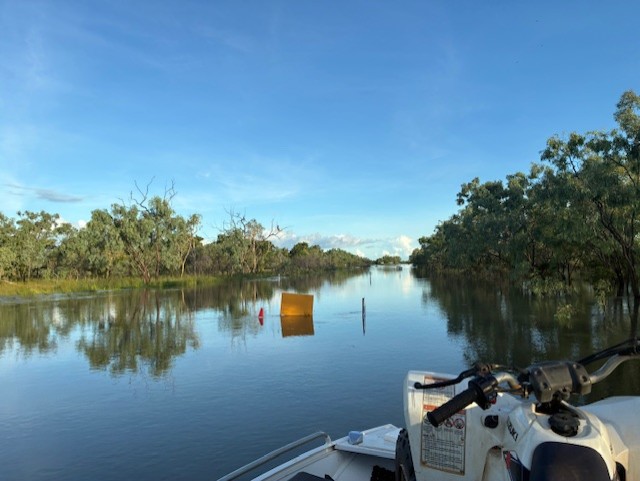
As rivers and creeks rose, flood warnings were issued for multiple catchments. Several waterways reached major flood levels, cutting road access and isolating remote communities throughout the region. Across many stations, paddocks went underwater, roads became impassable, and producers closely monitored livestock as conditions continued to deteriorate.
Towns including Normanton and Karumba have been isolated since 29 December and still remain cut off, receiving ongoing rainfall while also bearing the cumulative impacts of floodwaters funnelling through the major river systems that empty into the Gulf.
Despite the challenges, the flooding once again highlighted the resilience of the people in these regions. Community networks played a vital role, sharing updates on river heights, road closures and safety advice, and neighbours worked together to support one another.
Rainfall Records
24-hour totals including:
- 313 mm at Oakland Park (Gulf Country)
- 295 mm at Fish Hole Creek (Gulf Country)
- 238 mm at Miranda Downs Station (Gulf Country)
Many of these totals set new December daily rainfall records. The intensity of rainfall across cattle stations raised concern. Memories resurfaced of the devastating flooding event in 2019, when hundreds of thousands of cattle were lost still fresh in the region.
Event 2: Late-January Flooding
Just as the region began to dry out, a second heavy-rainfall event struck in late January, compounding impacts across the Gulf Savannah region.
This system brought renewed intense rainfall and rapid river rises, leading to significant flooding around Einasleigh and along the Gilbert River.
In Einasleigh, floodwaters moved through the township, inundating roads, homes and even the Einasleigh Hotel, which recorded floodwater inside for the first time in its long history. Water levels rose dramatically, prompting emergency evacuation orders and leaving residents anxious about the damage that would be revealed once waters receded.
Properties along the Gilbert River experienced extensive flooding, damaging grazing country, fencing and infrastructure.
Once again, community support proved vital. Local councils, emergency services, graziers and neighbours worked closely together, sharing information and assisting those affected. Helicopter pilots played a crucial role, and were described by locals as “flying angels.”
While monsoonal rains and flooding are a familiar part of northern life, the scale, duration and back-to-back nature of these two events have created significant challenges. Recovery and clean-up efforts are expected to continue for many weeks, and possibly months.
DPI Support Available
The Department of Primary Industries (DPI) has Impact Recovery & Response Officers (IRROs) visiting several local towns to assist producers and community members affected by the recent flooding. They can help with QRIDA applications, provide information on available support programs, and guide you through any recovery-related processes. Please feel free to reach out if you need assistance.