
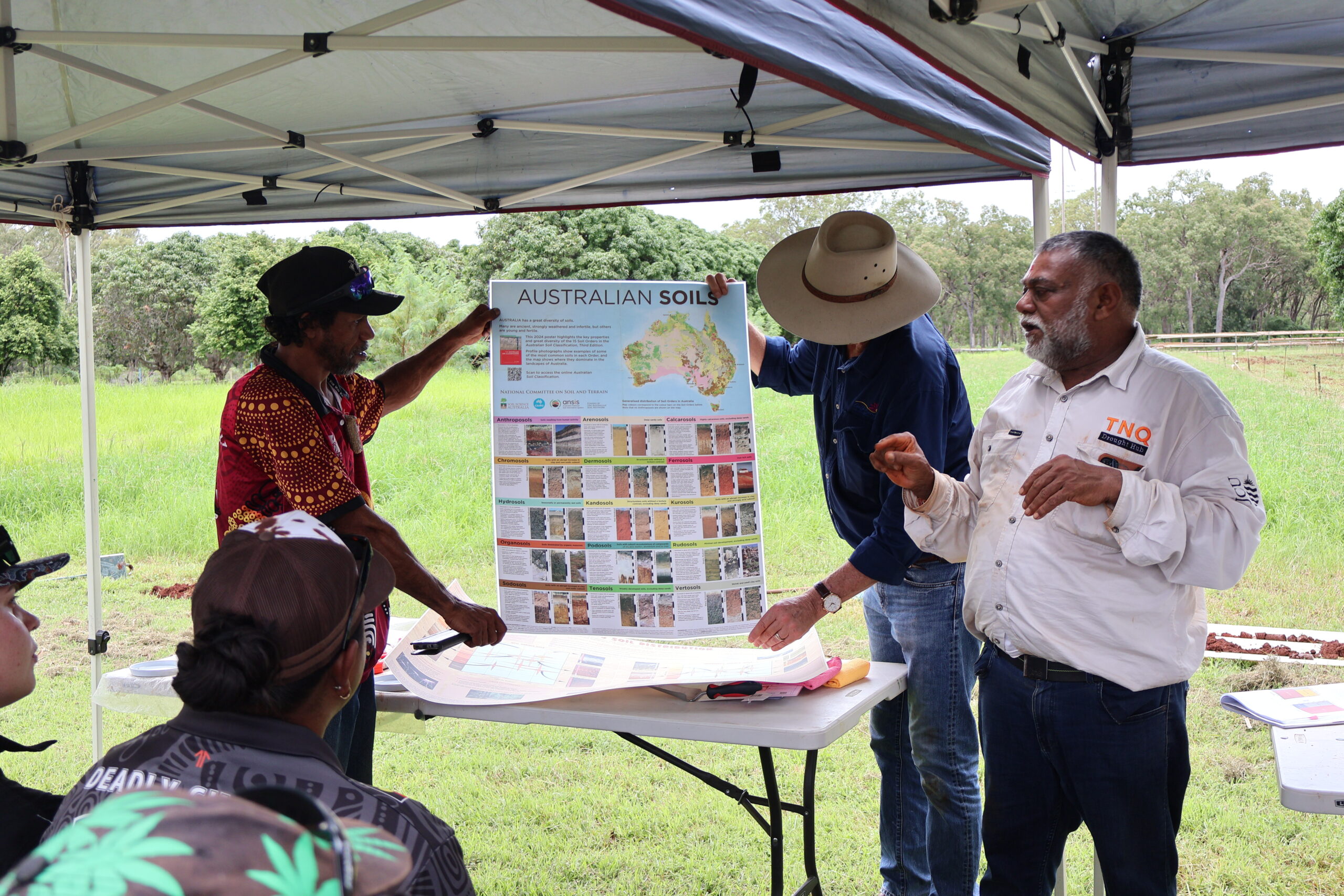
More than 20 people gathered at the Walkamin Research Facility on March 11 for a full day of hands-on soil training to boost regional knowledge of soil health.
The event brought together 22 NRM field staff from Gulf Savannah, Cape York, and Southern Gulf, along with nine Indigenous rangers, who spent the day learning practical soil characterisation techniques under the guidance of TNQ Drought Hub Regional Soil Coordinator, Dhiraj Gajera.
For participants like Ag Officer Julie Nicolosi, the training highlighted a fundamental shift in understanding soil itself, bridging the gap between science and real-world relevance.
“Soil only becomes soil when you’ve got the biological component – until then it’s chemical and physical, which is actually just dirt,” she said.
“If the chemical and physical properties are right, it creates a stable, well-functioning environment where biology can thrive much like a well-built, comfortable house people want to live in.”
She refers to the organisms – such as worms, beetles and bacteria – that call soil home and ultimately enrich it for human purposes like agriculture.
To better understand this science, attendees rolled up their sleeves to conduct pH testing, texture analysis, soil profile examination, structure assessment, and dispersion testing.
But the practical nature of the session also sparked strong engagement, with Julie noting the value of hands-on discovery.
“Seeing the interaction, magic and wonder in people’s eyes as they understood which properties determine what’s going to be present in the soil – that was an important takeaway for me.”
Activities concluded with a multimedia presentation of laboratory results from soil samples collected from a paddock on the facility prior to the training.
The session is part of a broader effort to equip regional land managers with practical skills and insights that can help improve land productivity, sustainability, and resilience across the Gulf Savannah and surrounding areas.
For your interest
To put the day’s training into context, the map below shows just how much soil varies from place to place. Throughout Queensland landscapes, pH levels change significantly.
These figures highlight the very types of measurements participants learned to assess during the Walkamin session.
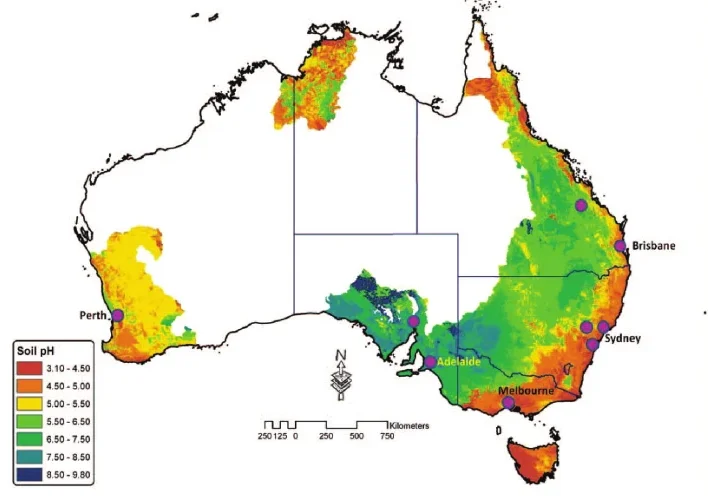
Source: Distribution of acidic soils
Soil pH measures how acidic or alkaline the soil is, on a scale from 0 (very acidic) to 14 (very alkaline), with 7 being neutral.
Thinking of the bigger picture, pH levels determine how healthily the soil is functioning, and ultimately influence pasture productivity.