
With support from the Queensland Government’s Natural Resource Management Expansion Program, Gulf Savannah NRM (GSNRM) will protect critical ecological communities in North West Queensland’s Great Artesian Basin (GAB) Springs.
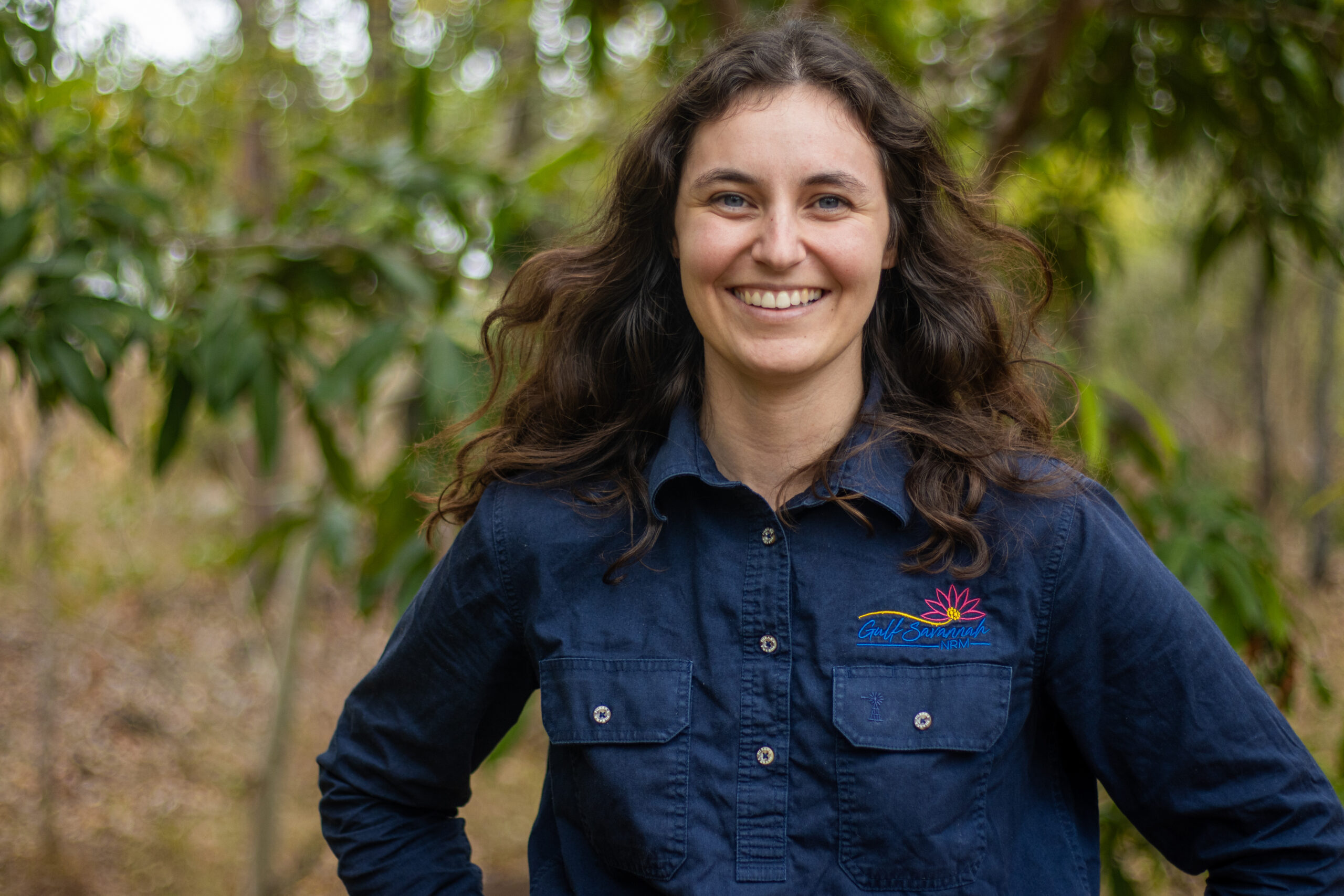
Leading the initiative is GSNRM’s recently appointed Biodiversity Officer: Océane Dupont.
Having spent almost a year with the organisation as an intern and Support Officer, her experience in project management, ecological monitoring, and navigating the challenges of fieldwork — from dust to sudden downpours — makes her well placed to guide this significant program.
With her diverse background, Ms Dupont said she feels ready to tackle the responsibilities of her new role.
From Switzerland to the Outback: a passion for conservation emerges
After completing a Bachelor of Science (Biology) in her home country Switzerland, Ms Dupont decided to go chasing the sun in Australia, discovering a love for environmental conservation along the way.
“At first, I was leaning more towards microbiology and lab work,” she said, “but it was during my lap of Australia that I realised I prefer spending time outdoors.”
Océane described our region’s environment as “so diverse and inspiring” — a backdrop that motivates her daily work protecting fragile ecosystems.
For Ms Dupont, however, the connection between people and places is central to her conservation ethos.
“I actually care about people first, and that’s why I care for the environment — concern for human life is what makes the most sense to me,” she said. “If you don’t have healthy environments, then humans will suffer.”
When asked about the biggest challenge facing our region, she pointed to climate change.
“We live in a place where so many factors are compounding, from sea level rise and intensifying cyclones to extreme heat and water scarcity,” she said.
“Unfortunately, it’s also going to be one of the hardest issues to combat in our corner of the world when it’s a global issue.”
Learning from statewide spring work
Following her appointment as project lead, Ms Dupont visited artesian springs at Edgbaston Nature Reserve, where she gained valuable insights into monitoring techniques.
Invited by Dr Renee Rossini, a researcher at the University of Queensland and Freshwater ecologist with Bush Heritage, Océane was able to observe firsthand how these springs are managed, helping inform strategies for Gulf Savannah NRM’s own conservation work.
During the visit she observed a variety of methods, from using drones to assess pig damage, to surveying invertebrates and evaluating vegetation around the springs.
“The methods they use, and the diversity of microhabitats within the springs, are aspects we can keep in mind for our own project,” she said.
“Even springs just a few hundred metres apart can host completely different species, so careful, detailed monitoring is essential.”
Ms Dupont also emphasised the importance of consulting a range of experts.
“We’ll likely work with botanists, invertebrate specialists, and other local experts to understand what’s unique about each spring,” she said.
“Every specialist brings a different perspective, and that helps ensure we’re capturing the full picture of the ecosystem.”
In addition to the nature reserve, Ms Dupont visited Desert Channels Queensland (DCQ), where she learned how their NRM organisation in Central Queensland is managing springs across large grazing properties and the common challenges faced when implementing conservation on a regional scale.
Through these statewide collaborations, Ms Dupont said Gulf Savannah NRM is building a strong foundation of knowledge and partnerships that will help guide our approach across North West Queensland’s GAB Springs.
Protecting the Springs: project scope and timeline
The GAB Springs are among Australia’s most ecologically significant wetland ecosystems, supporting endemic species of plants, fish, and invertebrates.
According to research from the Department of Environment, Tourism, Science and Innovation (DETSI), Queensland’s portion of the springs has declined by around 38 per cent compared to the pre‑1900 baseline.
Ms Dupont said the project will prioritise habitat protection across 12-hectares , focusing on ecological health and working closely with local landholders to implement sustainable management practices.
The initiative commenced in September 2025 and will run through to June 2028, providing a multi-year commitment to preserving one of Queensland’s most unique natural assets.